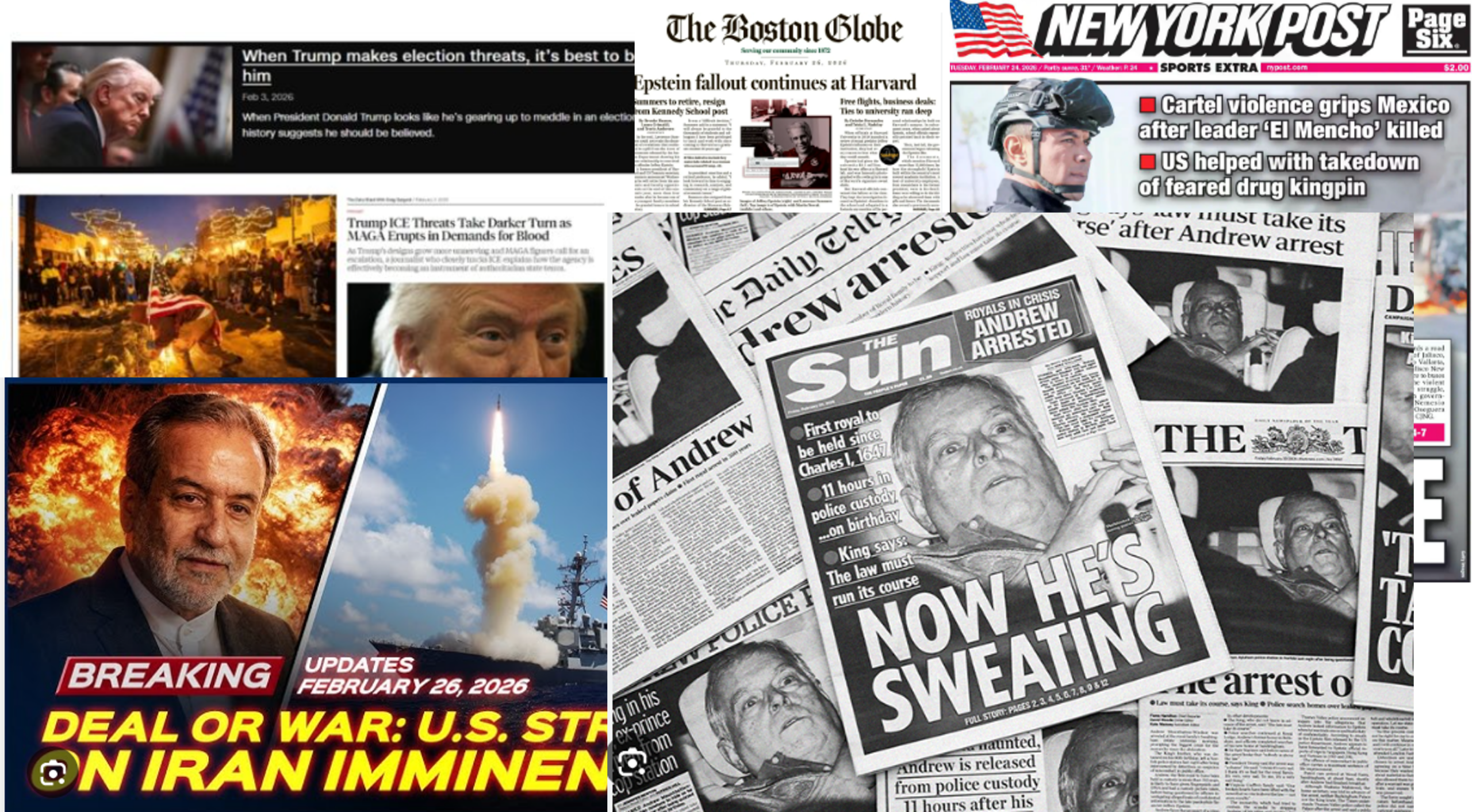
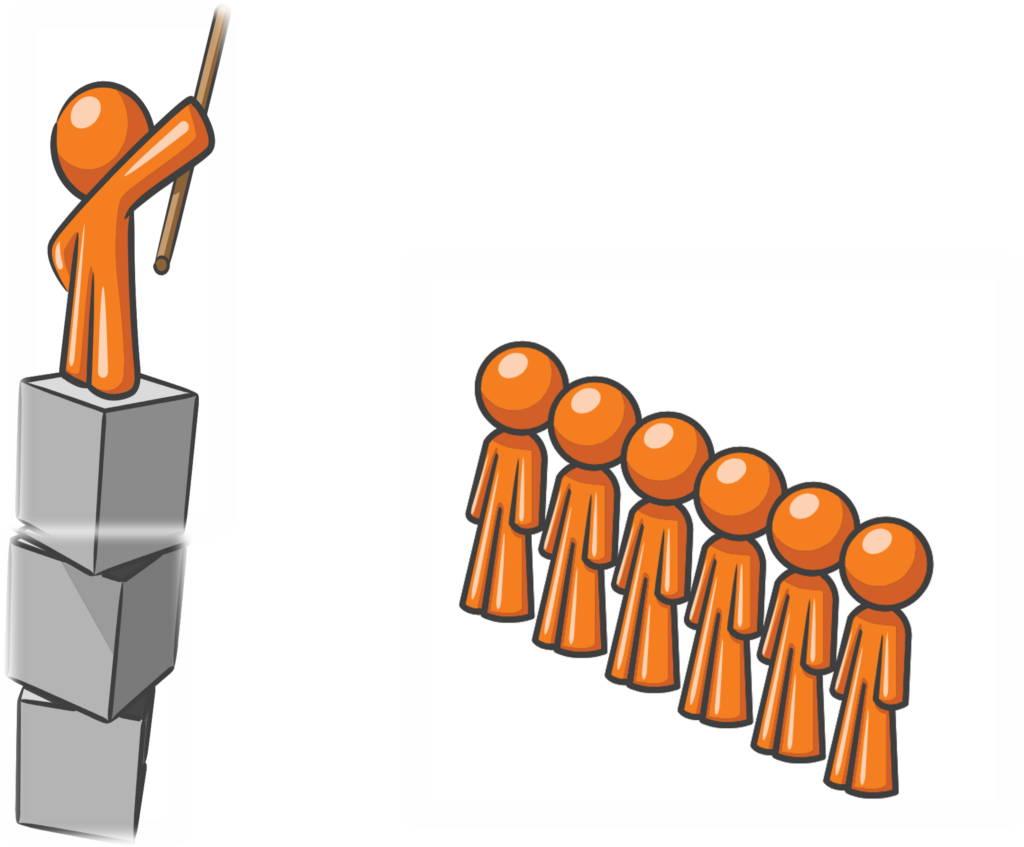
Authority itself is inherently an act of imagination
Richard Sennett
By definition, an assumption is a belief or concept taken for granted. Testing assumptions generally only happens when circumstances contradict that which we have presupposed as rules and realities of life. Or we want to make sure that our current plans under those assumptions won’t lead to disaster. Maybe we’re already there on that second scenario.
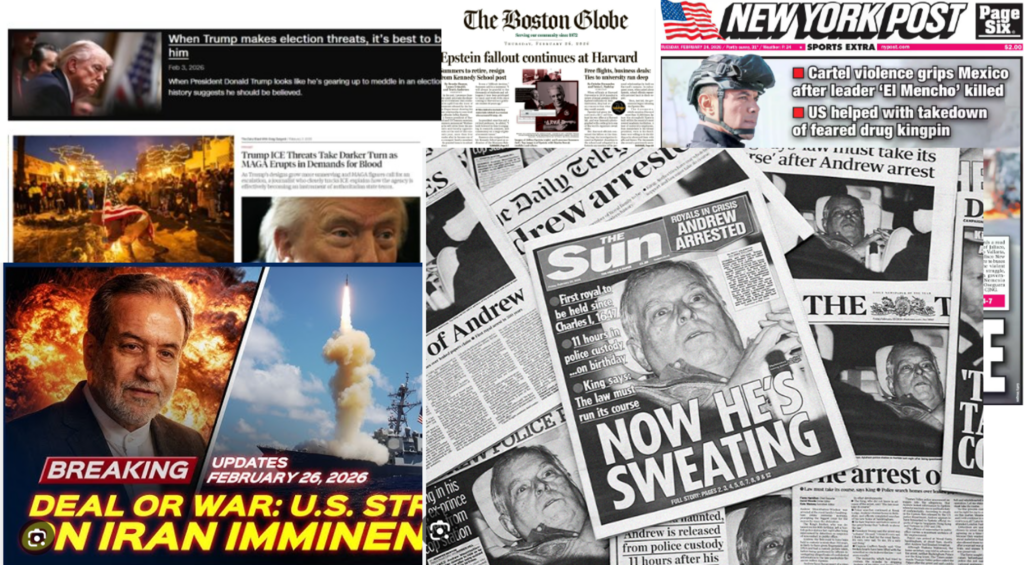
Part I of this three-part series recounted how the prolification of disorder, a spectacle impossible to ignore in our plugged-in world, provided a challenge to ideas about authority held for a long time, maybe my whole 74 years. The form in which authority exists today is locally erratically adequate, broadly good-for-nothing, and dependably bad for almost everyone. Disagree? Please educate me as to how authority is satisfying the “the attainment of ends“, which all of its observers and theoreticians posed as “the dominant
criterion of the validity of authority.” Besides not meeting that basic requirement, authority in our USA today is vicious, impaired, faulty, flawed, blemished, defective, bad; corrupt, impure, and debased.
That felt good.
Being against all authority would be a stupid move. One need not be a fanboy of authority to acknowledge its value, even needfulness, in a functional society. The question with authority always is the 5Ws : who, what, where, when, and why. Watching the 1961 film Judgment at Nuremberg last night, authority figures significantly: when is that power justified? What frameworks allow it to be fairly dispensed? What role do the people have in assuring that larger potencies — government, corporations, religions — neither amass reckless levels of power nor deprive others of their rightful authority. The back and forth between the Nazi judges on trial and Allied judges trying them reinforced what my initiator for this series, Richard Sennett, says about Authority : it is the relationship between the powerful and the weak. When it runs properly — legitimately — not everyone will be happy but most people can be safer, calmer, even happier.
My particular upbringing often produced skepticism about the bruited legitimacy of authority: we were taught to debate claims of authority, not just question them. This rendered the six Elliott children an affront to the nuns teaching us and a torment to friends unwilling to look things up at the library before offering any opinion. In other words, we were consistently annoying. Plus ca change… Yet within those doubts and complaints a belief abided that some types of authority would prove useful and reliable. The Elliotts were bandits, border baddies, reivers, but not actual anarchists; we talked a good game but growing up baptized our children, paid our taxes, and watched the news if only for the release of yelling at the screen.

Being Irish Catholic, the authority of the Church and indeed other religious institutions from Protestantism to Judaism held sway early, but by adolescence that confidence crumbled. That didn’t stop me from being Catholic, but it did make me question the authority claimed by those at the top. And this happened long before the revelations of horrific abuse and disgusting coverups. The combination of reading history widely and living it suspiciously will topple many a tenet even without scandals that prove how bad people claiming power really can be behind closed doors. Something about absolute power corrupting. But still I held out for some core of authority that stood untouched and would sustain individuals and communities if worse came to worse. Luckily for me, Catholic Leaders like Poep Francis and now Pope Leo turned the church back in a direction toward what Christ articulated, but there’s a long way to go. Elsewhere that’s not been the case with authority: Things fall apart; the center cannot hold
When the most horrible depredations — January 6th, murders of civilian by ICE, cynical maneuvering and even crimes by those granted the public trust in both parties, sex trafficking for the wealthiest and best-connected, again in both parties, devastation of our Earthly resources — happened in our secular society, it turned out that the core of our governmental, commercial, and journalistic systems had disintegrated, corroded by self-interest and double dealing. Authority was either missing, misused, or outright murdered. Confidence soured and decayed that some righteous and effective authority might appear to straighten out these messes. We have BIG problems with all realms of authority in our society.



I did not always feel this way. Assumptions about the authority of the United States governing system under our constitution were actually buttressed by Nixon’s 1974 resignation after Senate Watergate hearings and newspaper investigations. The result (despite Ford’s ill-advised pardon of the guy who was “not a crook“) seemed to confirm that both our political institutions and perhaps our most important social institution—journalism, the 4th estate—could exert accountability when needed. The Ronald Reagan years (Iran Contra, Savings and Loan Scandal , HUD Scandal , EPA Scandal, Wedtech Scandal , Operation Ill Wind) loosened and then educed a long erosion of that trust. It wasn’t just the way in which governmental bodies failed again and again whether through Bill Clinton’s misdeeds (he should have resigned) and George W Bush’s mistakes (he should have stuck to painting in Texas), but a realization that the media constituted a politics of its own if you consider politics at its most basic as the pursuit of interests. When the interest becomes financial survival, the NYT as an example decided with their famous innovation report that they “know what their audience wants and they know how to deliver“, but that strategy tilts towards SEO articles and clickbait and away from authority in the sense of “The fact or state of possessing credible information; power to inspire belief in the truth of something.” The internet’s inherent feedback loops fostered by algorithms are just as likely to find the crowd’s choices wacky as wise Authority loses a cornerstone when the press stops doing its job.

2016 due its revelations of the nature of a large swathe of my fellow citizens willing to vote for an illegitimate personality provided the moment when several assumptions about authority collapsed completely for me. I lived. 2020 provided a respite, what seemed like a course correction, but the margins of reassurance were slim. The behavior of individuals occupying functions of authority, however, worsened the undermining of my beliefs about where and how authority worked in this Republic. The clusterflock since then — Microsoft Word dictation doesn’t like me saying anything profane so we’ll go with that word, but you know what I mean—generated the final landslide of confidence in our systems. Only a cloud of dust remains.
Not every kind of authority is beneficial, but suffering through no kind of legitimate ultimate authority fosters disorder under which none but the wealthiest with their security forces and private islands may prosper. All that remains of my assumptions about authority is a bewilderment that they lasted so long and so wrong accompanied by a shame-faced Weltschmerz in finding out that Richard Sennett explained a great deal of the inevitable and dangerous erosion of Authority in his 1980 book of that name.

What appealed to me in that book during this assault by the wantonness of the executive branch, the weakness of the legislature and Supreme Court, and the wooziness of the news media was its careful analysis of how the current situation was already foretold IN 1980. We have been lurching toward this moment since the 19th Century! Sennet’s guide to the subject was a welcome complement to my rereading a piece first encountered in the 1970s: Leonard Krieger’s magisterial entry on authority in the Dictionary of the History of ideas . I needed authorities on authority for as Anatole Broyard, the influential book critic of the New York Times, wrote in a reassessment of Sennett’s book three years after its publication, “Authority is a subject on which most Americans consider themselves philosophers. No other people talk so insistently about the nature and the limits of authority as it applies to various social groups.” Discussion doesn’t equal understanding and may in this instance allow us to kid ourselves about our understanding of, relationship to, and problems with authority.
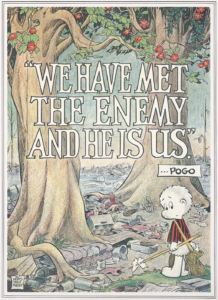
What are those problems? As already mentioned, those repositories of authority upon which we relied have gone wobbly. A Supreme Court that says a president can’t be tried for crimes? A sitting president (looking at you, my dear Joe B) who lacks the savvy or humility to know he should have been a one-term wonder? A current president whose only talents are the manufacture of distractions and the obfuscation of truths? Legislatures that cannot legislate yet collapse before lobbyists? Elected representatives who make important promises repeatedly and then just as regularly fail to keep them? Public figures who employ weasel-worded excuses instead of honesty, fund-raising instead of raising standards? Corporations that have corrupted their own standards and embraced a strategy of what Cory Doctorow pithily calls enshittification? (Had to type that one myself; no way Microsoft dictation can handle that term.) Media that bows to censorship or just pumps out what its readers crave as confirmation of their own biases? They are our problems because we allowed them to happen. Again, the old Walt Kelly wisdom is pertinent: we have met the enemy and they is us. Sennett wrote that “Authority is a matter of giving power a meaning.” What exactly is the meaning of our own authority right now if we have both given so much of it away AND the people wielding authority are either incompetent or evil or both?
One of our problems with authority as evidenced now in every public space is how childish in many ways the SOP is: in choice, we must move within the circumscription of our corporate masters, in social relations, we are reduced to one side denouncing the absence of some power and the other denouncing its perceived presence when we are not sidetracked to games, circuses, and reality TV. Repeat endlessly without making a difference, without authority.
Sennet’s quoting forty-six years ago of Sigmund Freud sounds very 2026 to me:
the masses who are always in danger of regressing back to earlier phases, where they are at once ravenous for the comforts of a stronger person and in a rage against the very strength they desire.
- Sennett notes that “This reinfantilization of the masses is what Freud believed he was seeing in Europe in the 1930s when he came to write his last works.”
- That comment sounded chillingly familiar to others made this past year. One need not be a Freudian—I’m not — to appreciate the perception that the masses, which means all of us, are to various degrees, ‘re-infantilized‘ by and within the current culture.
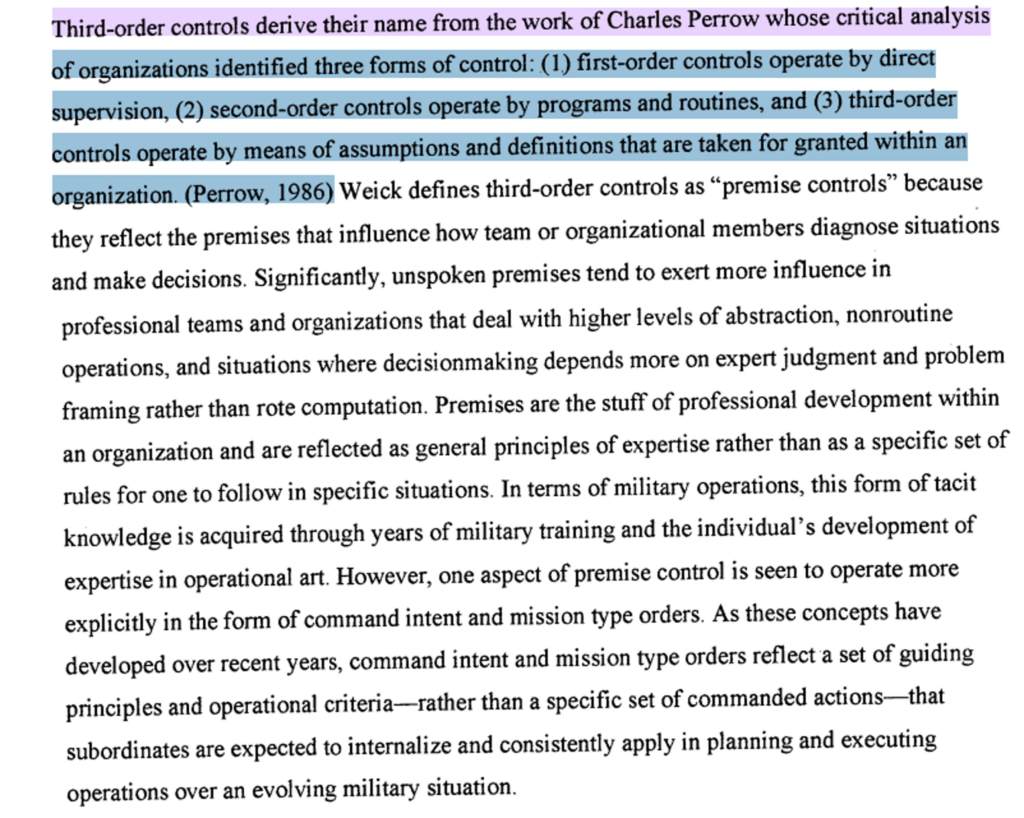
Hang on. Don’t click out of here just yet. Deep breath. I know, who wants to admit that to some extent the way we do things, the environment and systems of our time, have infantilized them? The term rankles; no one wants to be called an infant, a baby, but infantilization conveys the way in which adults are condescended to, belittled, indulged, and patronized by the powers that be whether medical, government, finance, and/or especially corporations. They ply a sneaky authority akin to what Charles Perrow called second-order and third-order controls, not direct commands but steering and controlling by programs and routines, by means of assumptions and definitions that are taken for granted within the community. There are those damn assumptions again.
That doesn’t mean that such control happens without dissent, defiance, or resistance when their authority is seen as illegitimate, as ‘You’re not the boss of me‘. Sennett put it this way, “The dilemma of authority in our time, the peculiar fear it inspires, is that we feel attracted to strong figures we do not believe to be legitimate…. what is peculiar to our times is that the formerly legitimate powers in the dominant institutions inspire a strong sense of illegitimacy among those subject to them. However, these powers also translate into images of human strength: of authorities who are assured, judge as superiors, exert moral discipline, and inspire fear. These authorities draw others into their orbit, like unwilling moths to a flame. Authority without the legitimacy, society held together by its very disaffection” He goes on to admit that this configuration is an inversion of what authority was thought to be for philosophers like Max Weber who felt that authority at its core must be thought to be legitimate.
Sennet tracks this transition of societal authority in the USA back to the paternalism of the 19th century in which the boss became ‘the father’ and the authority of other institutions correspondingly waned. He pegs Adam Smith as a influential voice who by endorsing “the market idea… vanishes the authority of persons”; the buyer of things is in charge. While this view ignores other aspects of Smith’s thought that championed sympathy and charity, Sennett nails the way in which our problems with authority started with us giving it away, or more accurately exchanging one version, whether church or monarchy or family, for another—the market. Those at the mercy of the market, which was most people except for some experts — doctors, engineers, scientists, etc. — who could call their own tune. (Even that’s a diminishing pool in 2026.) The nostalgic power of the individual flaunted in advertisements and popular entertainment is a myth for most if it was ever true.
Wealthy entrepreneurs took to the top then and have managed to stay there along with governmental figures who in many cases were not business figures but aristocracy. Being on top didn’t translate to appreciation as Sennett notes:
“The authorities promised protection or aid, but often did not make good on the promises. And from this gap arose the essential feature of modern authority lack authority: figures of strength arousing feelings of dependence, fear and awe — yet the pervasive feeling that there was something false and illegitimate about the result. The personal strength of the authorities was accepted, the value of their strength to others doubted. Here the split between authority and legitimacy began.”
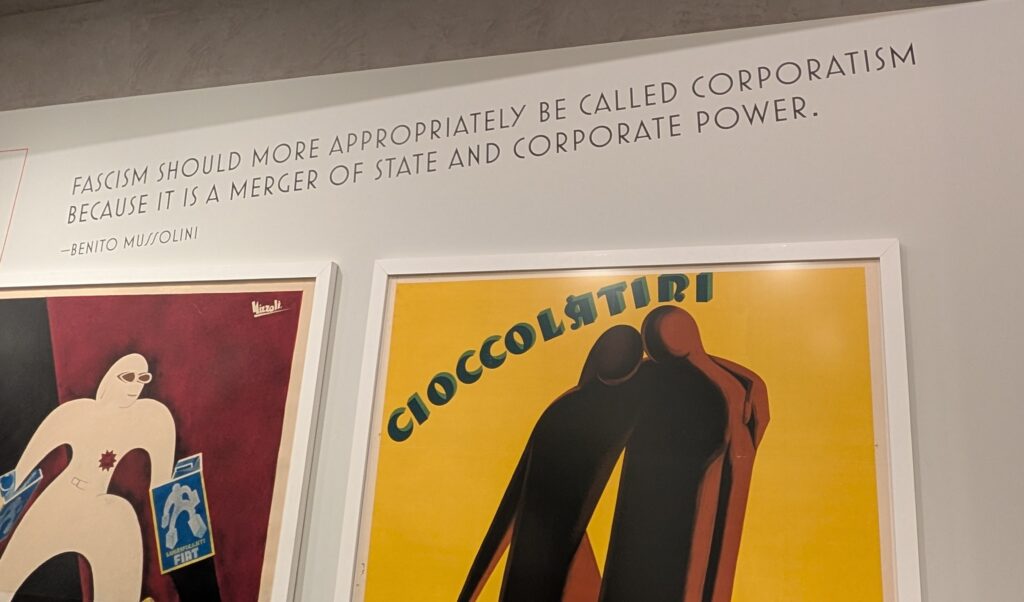
A recent visit to the Poster House museum in Manhattan for an exhibit of Italian propaganda art provided a telling quote from Mussolini: “Fascism should more appropriately be called corporatism because it is a merger of state and corporate power.” The merger happened in the USA as well but with corporate becoming senior partner. We have finally flipped Vilfredo Pareto’s distinction in The Mind and Society, between “a governing, political elite” on top and “a non-governing, non-political elite” below them in the authority hierarchy (Yes, that Pareto.) As Leonard Krieger noted in that entry on authority, Pareto assumed the rulers in the context of its authority over the nonelite, would constitute “the higher stratum of society, …their superior capacities were epitomized into what was suitable for “keeping them in power” and “exercising the functions of government” and what kept them “willing enough to use force” Who can claim that government enjoys that status today or that those in the highest positions are elite in the sense of “a select group that is superior in terms of ability or qualities to the rest of a group or society“? Pareto claimed that“History is a graveyard of aristocracies”, and the aristocracy that held authority is now sinking to six feet under.
We can mock those corporations and the governmental bodies now beholden to them, but even that action is part of the dynamic Sennett described:
“In modern society we have become adept at building bonds of rejection with authorities. These bonds permit us to depend on those when we fear, or to use the real to imagine the ideal. The trouble is that these bonds also permit the authorities to use us: they can exercise control of a very basic sort over those who seem on the surface to be rebelling.” One of our problems with authority is the way in which we kid ourselves about how even in its splintered form we are not manipulated by these other forces.

Sennett saw this illusion when he wrote that, “The rebound in modern society has been that people feel ashamed about being weak. They use the tools of negation [disobedient dependence, printing a positive, ideal image of authority from the negative which exists, holding a fantasy about the disappearance of authority] to ward off these feelings of shame, and to defend themselves against the impact of strong people who seem malign. The subjects defend themselves by declaring the illegitimacy of the masters.” But a declaration without action lasts as long and is as significant as a passing breeze. Instead, we must fix our own ideas of authority. We need to investigate what we are doing or not doing that contributes to this situation. Yes, I know we are mere individuals, but that’s where this change has to start.
Sennett almost 50 years ago painted a picture of this difficult frustrating relationship with authority that is still clearly recognizable today:
Our problem is a problem within the domain of being free, and it is a real problem. The dominant forms of authority in our lives are destructive; They lack nurturance, nurturance—the love which sustains others—is a basic human need, as basic as eating or sex. Compassion, trust, reassurance are qualities it would be absurd to associate with these figures of authority in the adult world. And yet we are free, free to accuse our masters that these qualities are missing. The difficulty is that the very act of rejecting them builds bonds with them. Bonds based on fear of their strength, or the desire to glimpse some image of strength through defining their failings, attempts to rest from an unsatisfying set of images something which will satisfy that basic need for authority…. Surely a person with any sense would resent being in the hands of these elusive or deceiving authorities. But the trap of rejecting them is more than a matter of hoping finally to get them to care period no one person, no matter how well meaning as a personality, can ever give nurturance to another person as though it were a commodity. Nor do you earn care as though earning interest on an investment. But the illusion protects itself. The person who is unsatisfied, unhappy imagines that if only there were some one different in control then the unhappiness would end, one would feel respected by being noticed.
So, what do we do? Does Sennett offer any help or hope? Can we reimagine authority in a better manner? That’s the question and maybe an answer of Part III, our final segment of this series about Testing the Assumptions About Our Problems with Authority and I hope you’ll join me for that in about a week’s time.
Notes
- I saw the inside of journalistic slipperiness during my ‘straight job’ years as a management consultant when Fox News newly born on Sixth Avenue in New York City hired me to establish a performance management system. (Such a system BTW is an instance of authority and only as good as the process by which criteria are created and evidence then judged. In other words, most of them suck. And I was an authority on them obviously because Fox News hired me to make one.) Everybody was very nice during the years of working there despite the obviousness of my different political persuasion; liberal might as well be tattooed on my face. The slant on their side was evident especially because my time there coincided the Monica Lewinsky scandals and the 2000 presidential election. Scheduled to speak to the entire manager group in Manhattan on the day that Al Gore conceded the election allowed me to hear Roger Ailes powerfully provide marching orders for how the coverage was to unfold. “Gore is a bad guy” was his core message.
- Even before that time having been a guest on other news programs, awareness existed that journalistic enterprises often started out with a preconceived idea of how the story should ‘taste’ and look and then proceeded to find the ingredients required for that recipe. And severe erosion happened with that authority source when the media infiltrated the public discourse frequently with stories that because of my own or others’ firsthand knowledge we knew to be biased, distorted, or outright false.