
My dear friend Zeineb Mahzouz sent me an article that drills into a subject that surfaces again and again in my stew of concerns that boil up on Testing: A Personal History — Meritocracy. Writing about the subject previously as in here insisting that most people fail to realize that our society is more a ‘ganglion of oligarchies’ than a pyramid of hierarchies, and saluting Sophie Callcott’s Excellent Essay Unmasking The Myth of Meritocracy. My posts have explored Myths of Meritocracy That Are Entangled in Myths about Testing and how Nepotism, Networks, and Nature Outgun Test Scores. I am not as certain as Freddie deBoer “that students are not equal but rather sorted into a distribution, and that at scale and in general students remain in a particular performance band for their academic lives“, which fact would make meritocracy a shell game. I don’t know enough, but if Freddie is even partly right, the notion of meritocracy would take a PR hit as such a reality would place ceilings on the potential achievements of many in society.
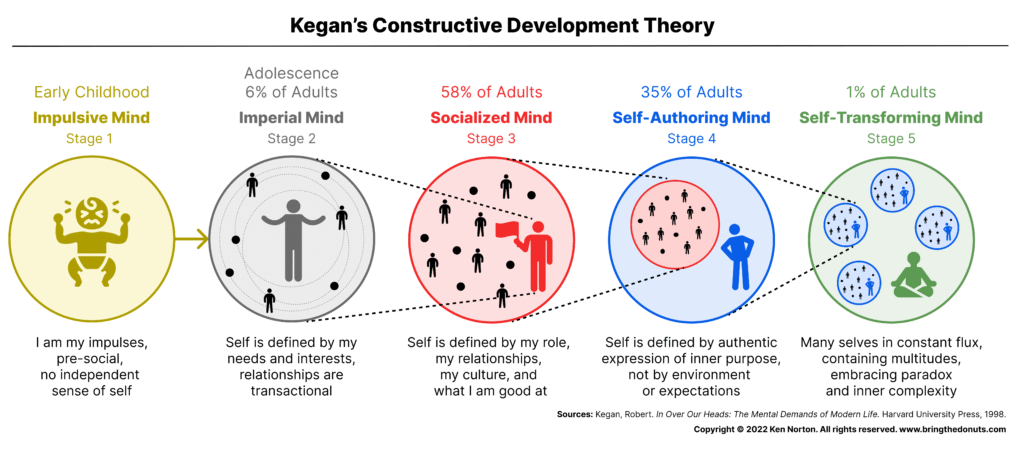
The idea in this blog is to not just to write about the tests that life provides for us, but to test the assumptions and beliefs accumulated over the years. (It’s my attempt to follow the Bob Kegan and Lisa Lahey approach to continuous adult development right up to Stage 5 the “self-transformational stage, at which point individuals have the capacity to accommodate more than one ideology and are not threatened by criticism” I’m not there yet.)
Zeineb’s article by Herman G. van de Werfhorst of both the European University Institute and the University of Amsterdam provides the counterpoint in this case, the opening to paradox. Entitled ‘Is Meritocracy Not So Bad After All Professor van de Werfhorst reports “…that educational expansion over time, and the policies supporting it, are linked to improved intergenerational occupational mobility.”
That’s a big deal: as Jason Beckfield, a sociologist at Harvard, in a 2021 commentary noted that, “People evaluate their fortunes relative to their hopes and expectations, formed, for many, as a sense of what is normal or abnormal, possible or impossible, in childhood.” They mostly “are untroubled if doctors make 10 or 20 times what janitors make, as long as janitors’ sons have opportunities to become doctors.” If intergenerational mobility is down or static as shown in earlier studies, that could “foster a social class variant of the racial resentment … that makes sense of working- and middle-class whites’ resentment of nonwhites and the Obama presidency.” (I repeat he wrote this in 2021.) Downward intergenerational occupational mobility, Beckfield held “sheds light on current US politics in a way that the well-known trend of declining real wages among all but the highest paid does not.” Sound familiar?
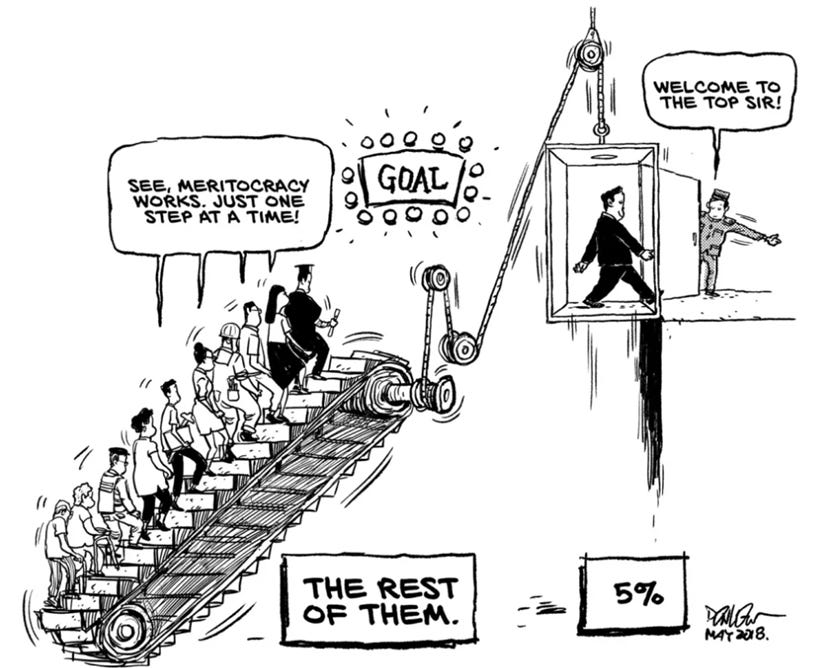
But van de Werfhorst’s study found “increased mobility through expanded educational opportunities is not negated by a strengthening of within-education elite persistence in occupational status, suggesting that occupational mobility patterns can genuinely change through educational expansion.”
Let’s unpack the jargon. ‘Within-education elite persistence‘ in occupational status describes the situation where people have the same level of schooling, but children from advantaged backgrounds still grab more of the higher-status (and likely higher paid) jobs than peers lacking those ‘privileges’. Many studies like the one by Song et al that caught Beckfield’s interest show education alone doesn’t fully equalize outcomes. Cue my thoughts about oligarchies and deBoer’s take that there are no miracles in education (WARNING: read Freddie’s take on intergenerational educational mobility for clarity on HIS beliefs rather than relying on my impressions)
I like van de Werfhorst’s summary of how we got to this point in our understanding of meritocracy:
Societies became more ‘meritocratic,’ according to modernization theory, leading to higher levels of intergenerational social mobility, because (a) education expanded to meet the increased demand for skilled labor, (b) merits defined by education became the central distributive factor for reaching more advantaged positions, and (c) inequalities in access to education by socioeconomic background were contested to reduce the waste of talent.
But the criticisms have been going on since the term meritocracy was coined by Alan Fox seventy years ago and then popularized by Michael Young in a satirical novel intended to lambaste such a societal structure. I wrote about Young (who accepted the title of Baron from the royals in the UK!) midway through a 2019 post on this matter.) The complaints about meritocracy remain consistent:
- elitist
- personalizes success and failure,
- ignores society’s structural barriers to achievement
- legitimizes economic inequalities
- the rich families game the system to make sure their children get the spoils; e.g., “a ‘class ceiling’ that limits opportunities for nonelite children in high-level employment even within the pool of graduates of highly selective institutions
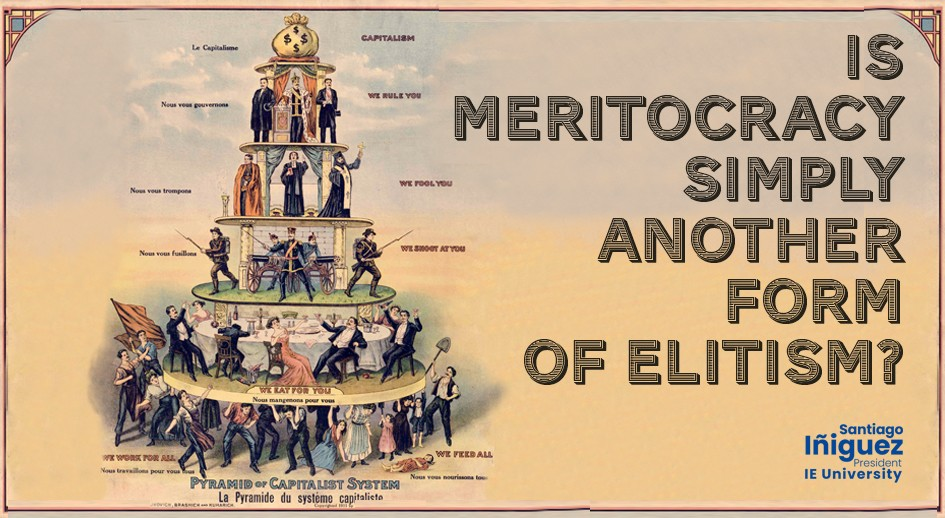
And that’s what made the article Zeineb forwarded to me so interesting because van de Werfhorst counters many of these claims with a very impressive research study design. The bottom line for me in his report (emphasis added) is this one:
the expansion of education did equalize opportunities. Equality of opportunity may be more damaged by anti-meritocratic tendencies that make it hard for children of less advantaged families to do well in school than by meritocratic allocation. For instance, economic inequality is likely to reduce social mobility.”
Going back to Beckfield’s comments, this topic requires attention for the good of our country. Downward intergenerational occupational mobility no matter its concrete effects creates a perception that hope is not warranted and the game is rigged against the many by the fortunate few. And such a perception leads to choices that imperil an increasingly fragile democracy. But what do you think? One way forward is conversation that leads to ideas and action. Please reply.
And on a different note, check out our new series — Chasing The Dead: Amateur Adventures in Genealogy