Short answer: Depends upon what you consider a ‘How-To-Write’ book
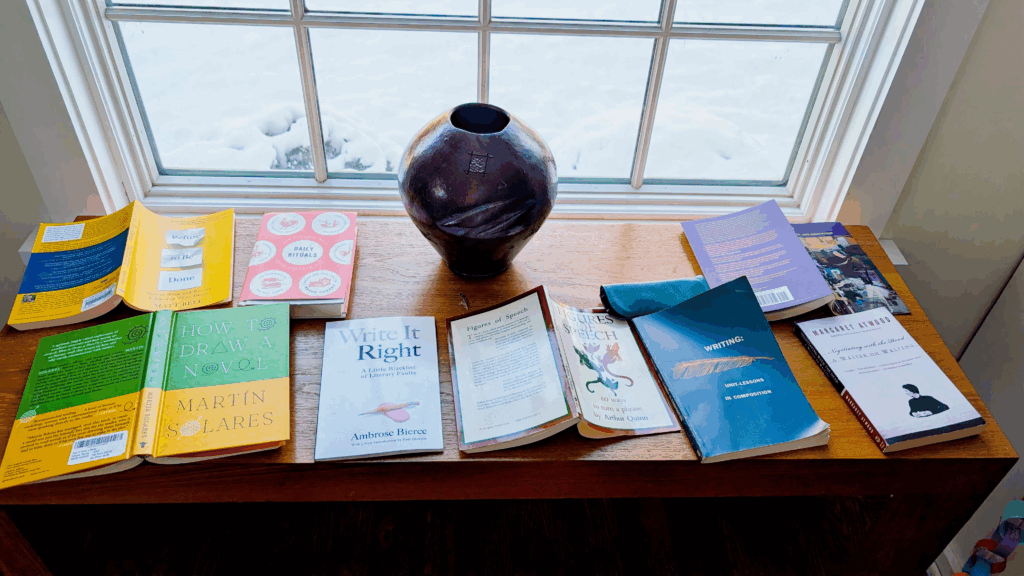
Yes, my good and faithful readers,’ ‘writes’ is a word; Obsolete in most places admittedly and only used in northeastern Scotland as of 1974, but it’s a real word signifying ‘A written record or work; a book, a letter, a document, etc.’ Even if it wasn’t, however, who’s to tell you that you can’t use it? The writers of books on how to write, that’s who. Are there any of those plentiful guides that prove actually helpful? This is only a semi-rhetorical question because this post shares a few that appealed to me probably because they are less prescriptive than descriptive, enquiry of the act of written creation presented more as a quiet conversation in a cafe than a lecture over your shoulder. How does such a post fit into the boundaries of Testing: A Personal History? Well, first off, who said there were boundaries here? TAPH was just a good title for a Substack given my almost twenty year straight job at what was once the world’s foremost testing organization. Secondly, every time setting out to write something is a test, a very specific kind of trial of will and wit.
Many sources offer instruction on writing especially in the commercial vein. Social media platforms changed so many things about writing, but one of the most notable is the proliferation of advice and the proffering of tutelage about how to write. Carlos Greaves in McSweeneys smartly sends up the hucksterism of these ‘one neat trick’ impresarios who opine on platform presence and increasing followers while gliding past the essential question of why we are writing in the first place. The books that cover this subject are more useful and I realize that my experience with them now goes back sixty years. And yet this year, 2 books stood out for me in their approach. Reflecting on them and composing this piece centered me as to what matters most in writing. So, not a how-to from me, but more of a what made a difference in such books.
Elements of Style
The Elements of Style by Strunk & White was handed out to freshmen at Saint Peter’s Prep in 1965. Realizing now that this edition was only six years old when we received it seems strange because faculty acted as if this was some lost book of the Bible recently unearthed in a cave in Egypt. As with my experience of that weightier sacred volume, Elements Of Style worked for me by adhering to its commandments selectively. Today some wags carp about the whole book, but anything good attracts carp. For clarity; that’s carp as in “Carping speech, cavil”, not Cyprinus carpio or its various cousins under that name who have invaded the ponds, lakes, and rivers in the Midwest. As that previous sentence demonstrates, I don’t follow strictly what Strunk and White advise, And the critics don’t seem to get that. Use active voice, yes; use fewer words, maybe. Even EB White admitted that “late in the in game … he was batting .500’ in certain opportunities to follow Strunk’s imperative to ‘omit needless words’. (And I place punctuation outside single quotes if that seems apt to me; take that Chicago Manual of Style.) White’s take on his beloved mentor’s first principle retains the idea that, “Vigorous writing is concise. A sentence should contain no unnecessary words, a paragraph no unnecessary sentences, for the same reason that a drawing should have no unnecessary lines and a machine no unnecessary parts. This requires not that the writer make all sentences short or avoid all detail and treat subjects only in outline, but that every word tell.”
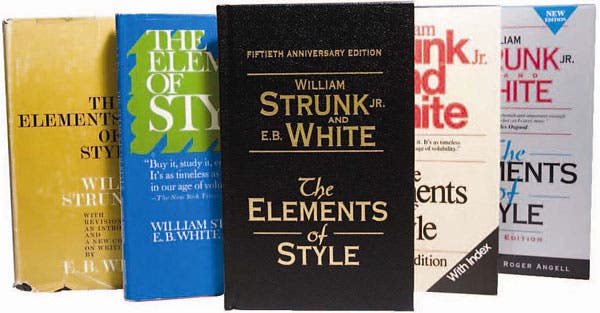
That’s good as far as it goes, but comparing writing to a machine bespeaks one particular mindset for expression and there must be room for others. We don’t want all our essays to hum like the well-tuned Stutz Bearcats of that time. White recommended Strunk’s original guide’s intention to get writers to focus “the rules of usage and principles of composition most commonly violated.” Mission accomplished and kudos extended, but writing is not primarily about following rules. And as Arthur C. Clarke first admitted in his writing, ‘Rules were meant to be broken’. (BTW, White in considering Strunk’s intent might be thought prescient about more than writing: “Unless someone is willing to entertain notions of superiority, the English language disintegrates, just as a home disintegrates unless someone in the family sets standards of good taste, good conduct and simple justice.” Ahem.)
But Strunk and White told us to read the best writing. My father told me when I was very young that Somerset Maugham said that the way to learn to write is to read and the way to learn to read is to write. (Later I figured Maugham like all great writers stole that from 17th Century Francis Bacon who stated that “Reading maketh a full man… writing maketh an exact man.” God knows who Bacon took that from.) So I read everything I could, which is a necessary but not sufficient cause for good writing whereas you could probably be a good writer and think that Strunk and White were linemen on the 1957 Green Bay Packers.
Modern English Usage
The dictatorial guides entertain and enlighten me, not via their fatwas and fussiness, but because of the fecundity of their examples. And they have such confidence in their opinions; e.g., A.B. Guthrie Jr., the screenwriter of Shane mandating that “Nouns and verbs are the guts of the language. Beware of covering up with adjectives and adverbs.” Variety was too spicy for his literary life.
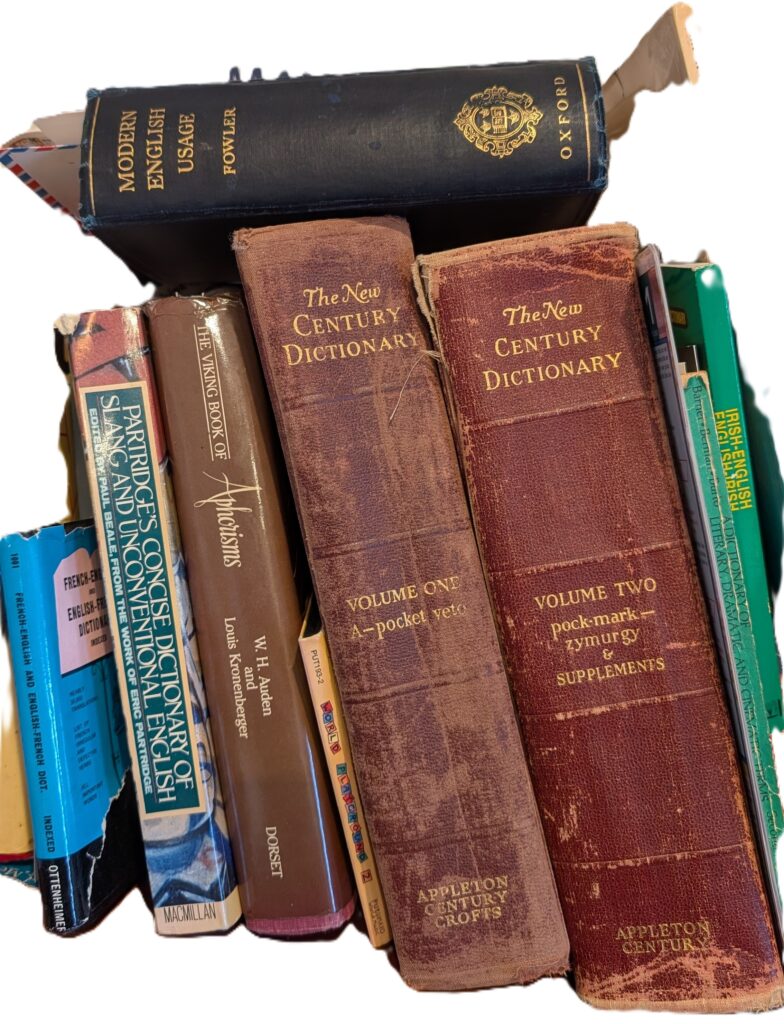
The most confident of these language martinets came to me because the previous owner of the house Marjorie and I bought in Tarrytown, New York in 1988 left a copy in the attic of Fowler’s Modern English Usage. He also left photos of him as an Olympic diver for Canada in 1936 posing happily with Nazis and nudes of his late wife, but we ditched those and embraced the Fowler for its 742 pages of eloquent harrumphing about things that are “hardly tolerable” but “not objectionable”. I love this decree that made it onto the OED: “Excessive use of exclamation marks is..one of the things that betray the uneducated or unpractised writer.” Ouch!!!!
And here’s HW on the semicolon “the use of semicolons to separate parallel expressions that would normally be separated by commas is not in itself illegitimate; but it must not be done when the expression is so separated from a group that is to be separated by nothing more than a comma, or even not separated at all, from another part of the sentence; to do it is to make the less include the greater which is absurd.” The man expounds in this book on the uses of “that” and “which” for twenty pages: respect, but also an incitement to heresy if not rebellion.
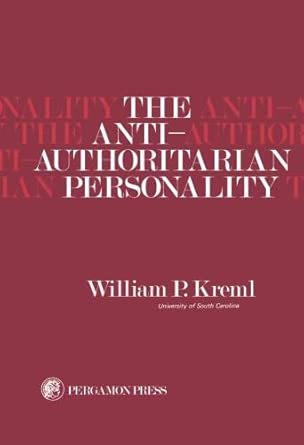
As with so many other layers of my life, the reaction to this kind of writing guide stems in part from my own problems with authority. As a senior in college, that anti-authoritarianism, which with the heedlessness of youth I flaunted, almost sabotaged my admittance to the writing seminar that poet John Fandel taught. My reputation as a wildly hirsute, wisecracking, freewheeling, convention shattering, class-skipping performer needed to shrink into the persona of a humble pilgrim in order even to get a screening interview. Seeking to enter a class where discipline and tradition reigned required genuflection from me and generosity from Mr. Fandel. Adherence to craft mattered and masters like Fandel determined what constituted craft. When poet Harvey Shapiro reviewed Fandel’s first book of poems in 1959 he described his style as “very quiet and very clear”, which also fit his method of instruction in that seminar. My work was quite unquiet and maybe overly lush. Our assignments for the semester were weekly brief essays. (These short pieces were very much in the style of the pieces that for years appeared in the NYT by Verlyn Klinkenborg, author of ‘Several short sentences about writing’ which I also would later absorb. He would have done well in Fandel’s class.) Fandel was kind, wry, and generous, but the tenor of my work bumping up so insistently against his model led to his pronouncement in the final one-on-one granted each senior that my goal at the end of my life would be to produced one essay polished into a gemlike state, a piece that mattered, perhaps published in a minor literary journal. That’s poet speak for ‘Don’t get your hopes up, kid.’ Maybe he was just setting the bar low, but at twenty-one years old such a statement was not confused for an endorsement.
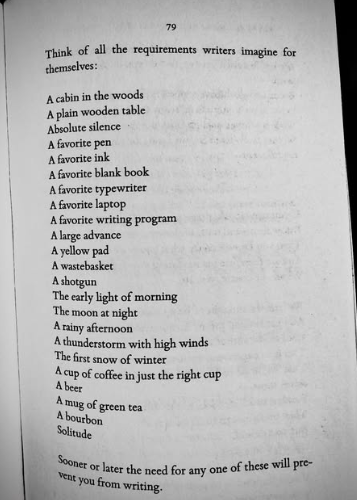
Thus chastened, my consumption of guides to writing began with an assist from the schoolbook depository of New York State. Fresh out of college as a reform school English teacher, that department’s offers of all sorts of books included guides to composition. I read them all and sadly for some of you to little effect. A copy of one of them remains in my library. Perusing that paperback, Writing: Unit Lessons In Composition published by Ginn and Company, two reasons for its survival occur to me: the quoted sections are superlative ranging from Dylan Thomas and Stephen Crane to Thomas Wolfe and Herman Melville. Those excerpts are like really good… brief essays. Anytime I open those pages the enjoyment of encountering these pearls of literature returns. The other reason is that the recommendations for constructing a purposeful sort of language are amusing in their quantity and condescension; They represent a kind of time capsule of a certain way of explaining how writing should work.
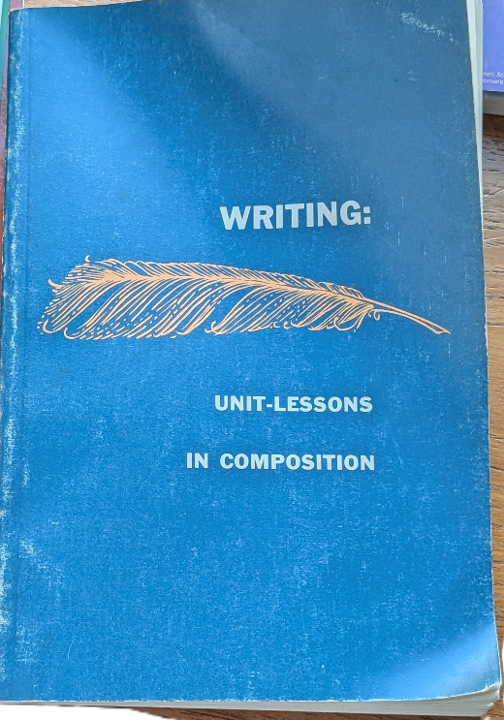
Teaching AP English in a reform school made unlikely the prospect of taking my students through twenty-five chapters and 160 pages of how-to. But subjecting them to the way the book’s five high school teacher authors (three of whom were from the same district in Larkspur CA) chopped up the art of composition into chapters such as ‘Render Sensory Experiences’ and ‘Emphasize With Paradox’ was against my grain. (The latter section started off with this instruction: “One of the surest ways to engage a person’s attention is to say something that startles him.” Since some of my students were in the reform school because of convictions for mugging and stick-ups they hardly needed this tip.) The preface had an inscription by Richard Brinsley Sheridan that gave away the books intentions: “Easy writings vile hard reading.” The authors were determined that no one following their instruction would have an easy time of writing.
Sticking to the sparkling excerpts at the beginning of each chapter from Hemingway, Orwell, Forster and Conrad, however, gave my kids an idea of what was possible from stringing words together. (BTW unsurprisingly for a book published in 1965, which is why we probably got our copies for free in 1973, this guide only included selections from white males despite one of the authors being a Mrs. Louise Velt, of lovely Larkspur CA. In that class, I countered with Autobiography of Malcolm X and Claude Brown’s Manchild In The Promised Land as well as poetry by Gwendolyn Brooks. My classes were over 2/3 kids of color; we all want to see examples of how our people won at writing. And my guys then wrote their stories with massive amounts of embellishment, but what writer doesn’t do that? My teaching was imperfect but getting them to write was one good thing done for these teens already consigned to the margins. It was the best I could do because as Kupajo (Tom Whitwell ) noted recently “Writing forces you to tidy that mental clutter. To articulate things with a level of context and coherence the mind alone can’t achieve.” Writing makes your story — imagined, exaggerated, or actual — real.
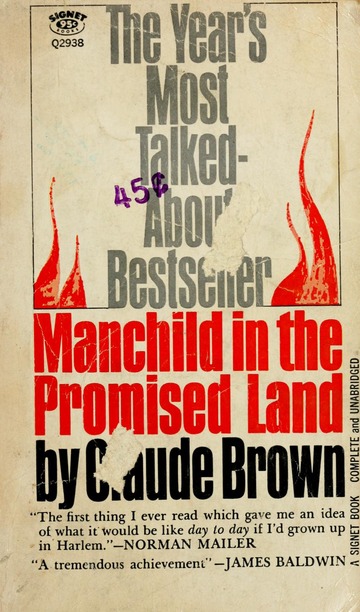
I didn’t restrict myself to those books available for free. Some of the titles turned to included Bird by Bird by Anne Lamott for encouragement, Pilgrim at Tinker Creek by Annie Dillard for description, and On Writing Well by William Zinsser because William Safire in his NYT On Language column recommended it. And Safire despite his distressing politics in being a Nixon enabler had a sparkling wit and a sharp eye for good phrases. Being anti authority does not make one anti imitation.
And so, the homage to these handbooks has continued with various muses. I keep on finding them: just yesterday Xerxes Jeeves on Threads introduced me to the notion of Scene and Sequel from Dwight V. Swain’s Techniques of the Selling Writer. It’s not going to write anything for me, but such books when done well and originally carry the possibility of fixing a flaw or buttressing a technique. ‘When done well’ is the key but for each writer that criterion might be different depending upon where they are in their career. Here are a few permanent residents of my shelves that betray my attitude:
- Rilke’s Letters To A Young Poet for inspiration with maybe a touch of selection bias (‘A piece of art is good if it is born of necessity. This, its source, is its criterion; there is no other.’)
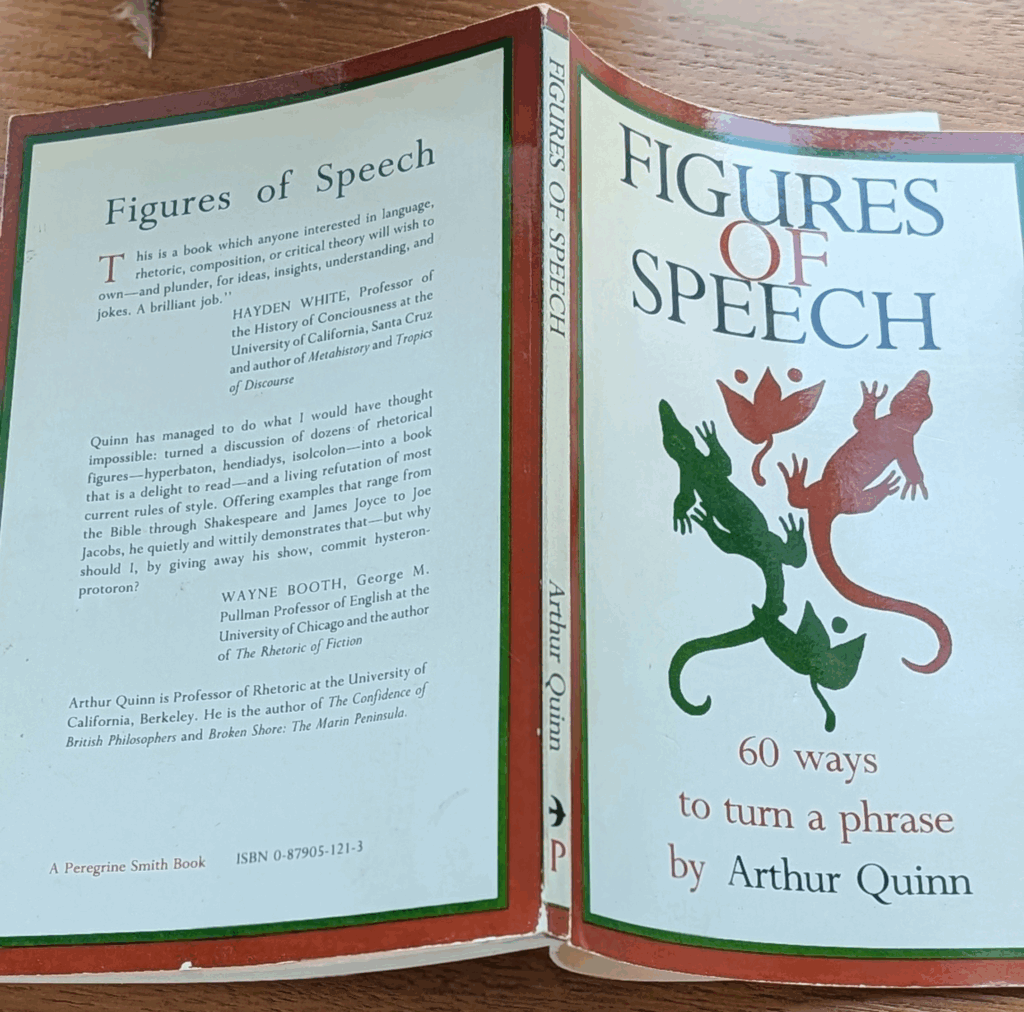
- Arthur Quinn’s Figures Of Speech for its compendium of ‘ways to turn a phrase‘ felicitously presented and blessedly unpedantic.
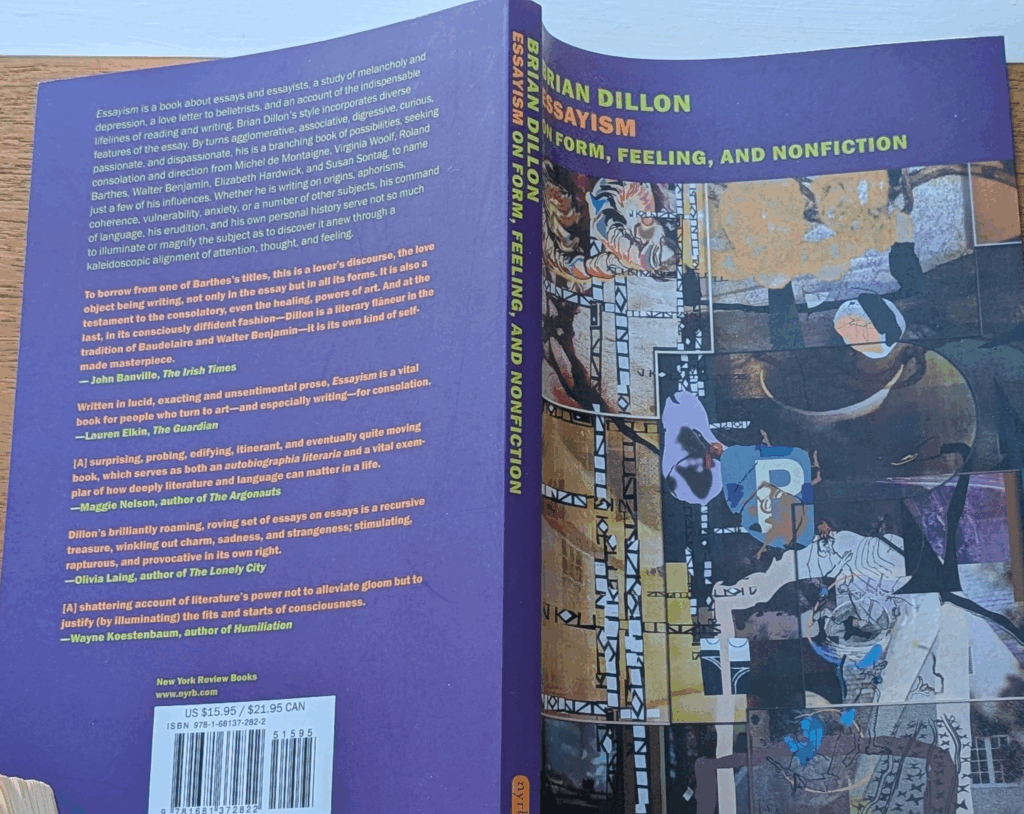
- Brian Dillon’s Essayism for its evocation of style as ‘the prize not a rule of the game’, And for displaying to me gems like William Carlos Williams’ espousal: “ability in an essay is multiplicity, infinite fracture, the intercrossing of opposed forces establishing any number of opposed centers of stillness.”
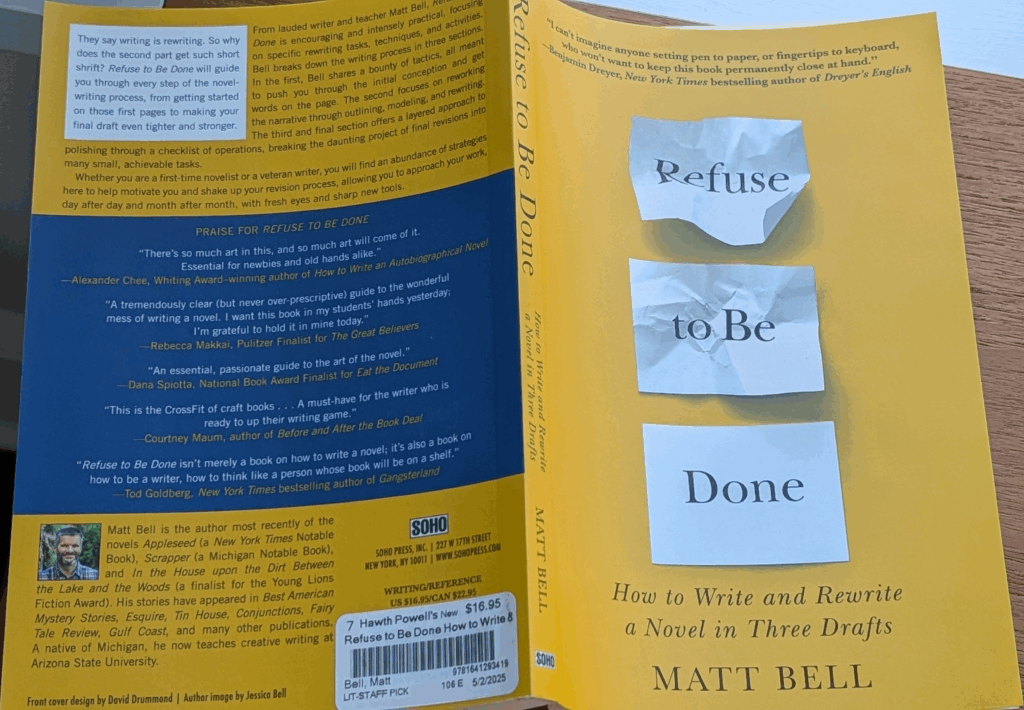
- Refuse To Be Done by Matt Bell for its explication of revision and rewriting in the context of creating a novel, which is something I haven’t done yet but if I do this book will prove a guide
Leah Sumrall in the review of Matt Bell’s book linked above makes a point that I think is critical to an appreciation of these kinds of guides: “I love craft books. It isn’t so much that I read them hoping to learn something new (though I almost always do), but that I enjoy finding new perspectives on what I already know about writing.” The problem with some volumes in this genre is that they mistake two types of knowledge — know what and know how. This take arises from my years in straight jobs especially Chief Learning Officer at ETS where the distinction mattered. I owe my deeper understanding of it to a mentor and friend the late great Larry Prusak. This snippet from an interview he gave says it all very succinctly:
All knowledge is tacit. Someone once asked me to write an essay on what I learned growing up in Brooklyn, New York. And I could never say enough, I mean, there’s so many – the smells, the sounds, the problems, dah dah dah. All knowledge is tacit. Some of it becomes explicit. But a better way of looking at those terms are “knowhow” and “know what.” Know what, for example, if someone’s talking about France, you would know that Paris is the capital of France. But knowhow, how to get around in France, how to act, how to speak, that’s knowhow.
CS Lewis sharing with humility some ‘know-how’:
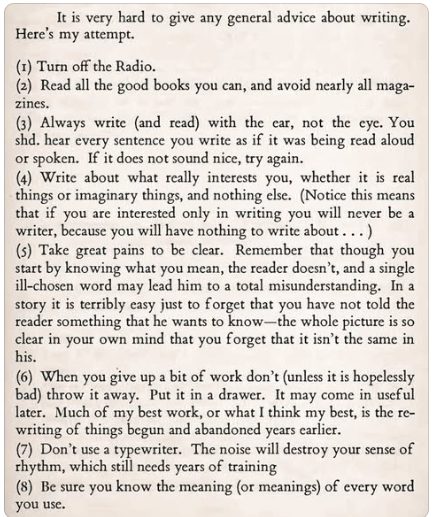
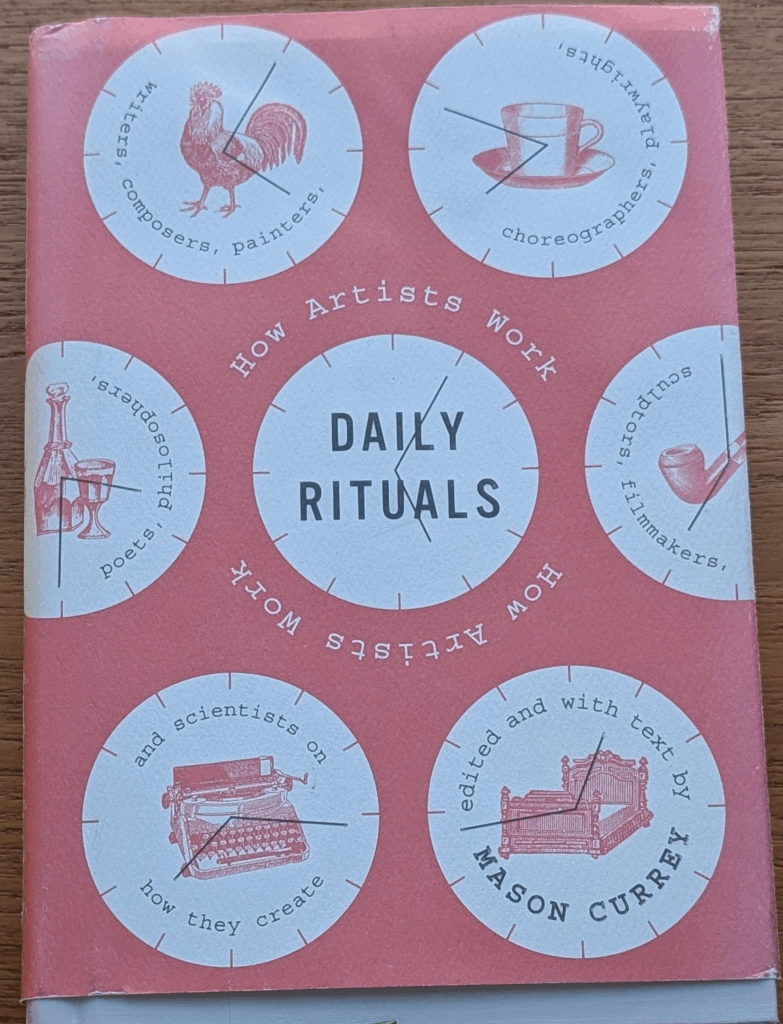
The how-to write books are hooey when they fail to acknowledge the difference between ‘knowing what’ tips and ‘knowing how’ reality, the tacit stuff. You only get the know-how of writing by doing it, then reflecting on what you’ve done, then doing it again. Additionally, unlike learning tennis or heart surgery the latitude of what constitutes writing is so vast that no one book could serve as the definitive guide anyway. And aping the ways in which other writers went about their business isn’t likely to manufacture the right process for you. Mason Currey’s entertaining book Daily Rituals — How Artists Work is filled with purported self-reports of how the great artists produced their great masterpieces. But understanding that Thomas Wolfe in trying to follow up the success of his first book, Look Homeward, Angel, began the practice of fondling his genitals while looking out his window so that it “fostered such a good male feeling that it had stoked his creative energies” isn’t going to work for most of us. And I say that from a theoretical rather than an empirical perspective. It seems mundane to hear about how Joseph Heller wrote Catch 22 in the evenings or Nicholson Baker isn’t terribly strict about his writing schedule even though he starts on a typical day around 4:00 or 4:30 AM only to go back to sleep a bit later and start working again in the daylight. A specific observation is made that he drinks coffee both times that he gets up. This is TMI, not even know-what. The best we can hope for from books about the subject is that they make us close them with a satisfied smile and go back determinedly to doing our own work.
With that precept in mind, two final books in this idiosyncratic survey might capture the attention and imagination of curious authors:
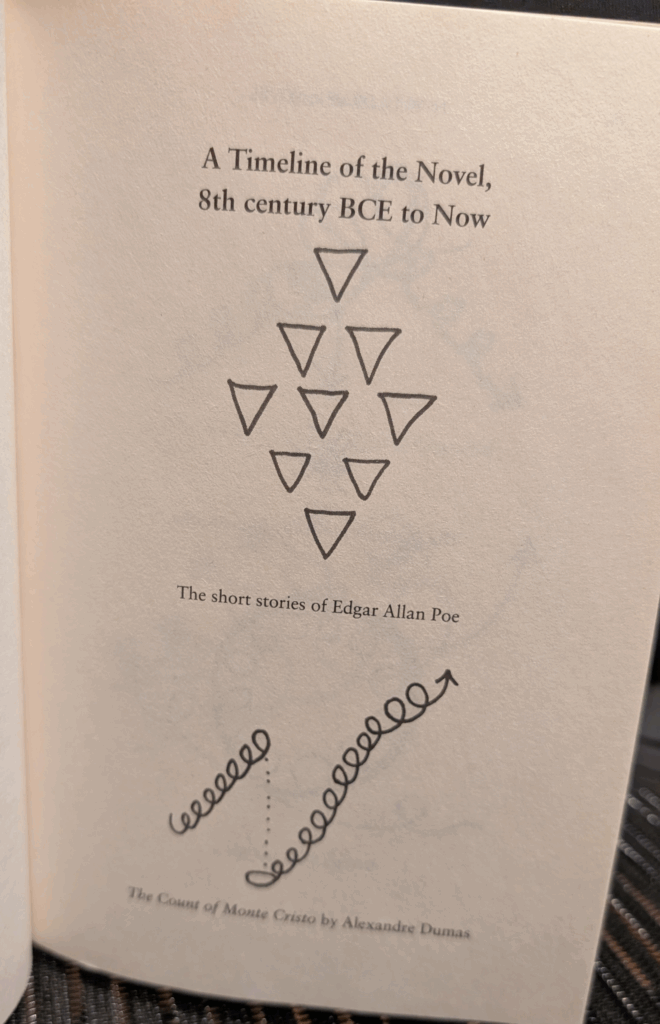
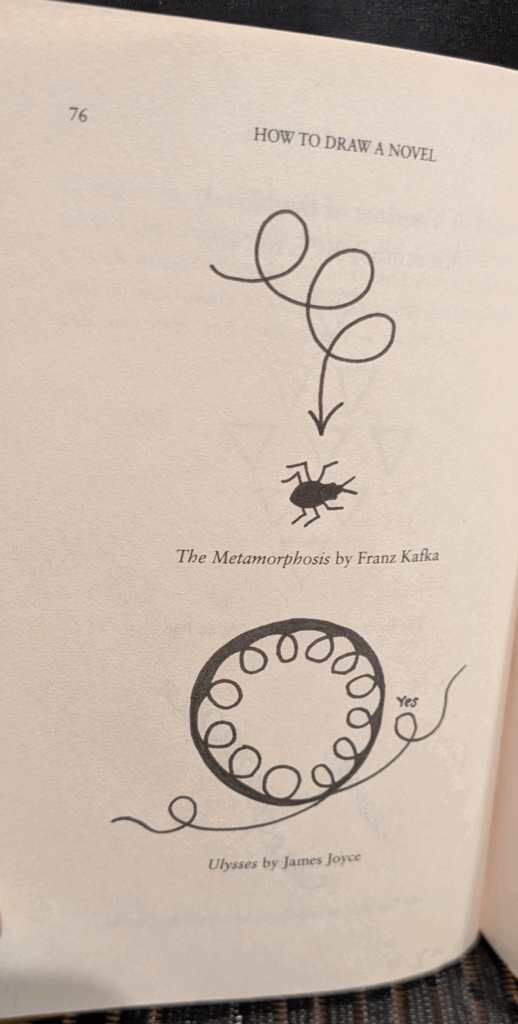
How To Draw A Novel by Martin Solares translated by Heather Cleary. With the plenitude of questions, cautions, and extracts from other novelists, Solares makes us think differently about characters and beginnings and structure. But he does so with the addition of and unusual tool drawing, which should be obvious from the title of his book. He argues that these sketches help him to understand forms, patterns and direction. I think I like this book best because no one else has ever written anything like this about writing. In order to achieve that distinction, it seems that Solares has read closely all of the books that I think matter and many more in other languages that now I have to pursue. In the middle of his book, he produces six sketches that he entitles a timeline of the novel 8th century BCE to now.
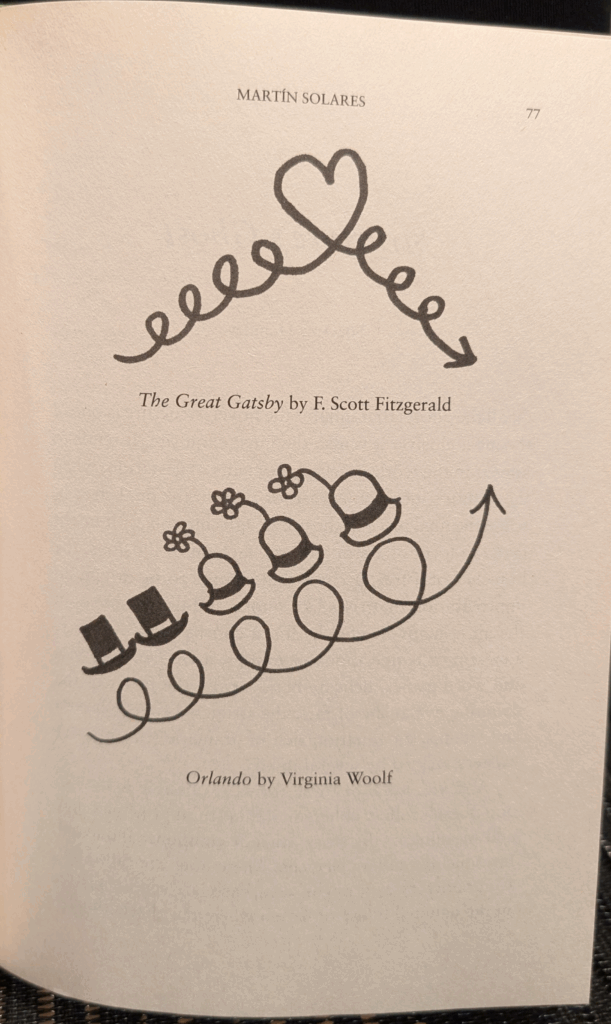
Brilliant.
But my all-time favorite book on writing is Negotiating With The Dead by Margaret Atwood, which figures since she’s also written two novels that would be on my top 100 list if I ever bothered to write: The Handmaid’s Tale (not the TV series) and The Blind Assassin. Atwood steps back from the actual writing of a book or essay to engage with the idea of who a writer is anyway: “Being a writer, however, seems to be a socially acknowledged role, and one that carries some sort of weight or impressive significance—we hear a capital W on Writer.” There are useful insights about what it means that we have chosen to be writers whether anybody validates that choice for us or not. (One of my favorite quotes of all time on this subject is from Lorrie Moore who once said ‘validation is for parking tickets’.)
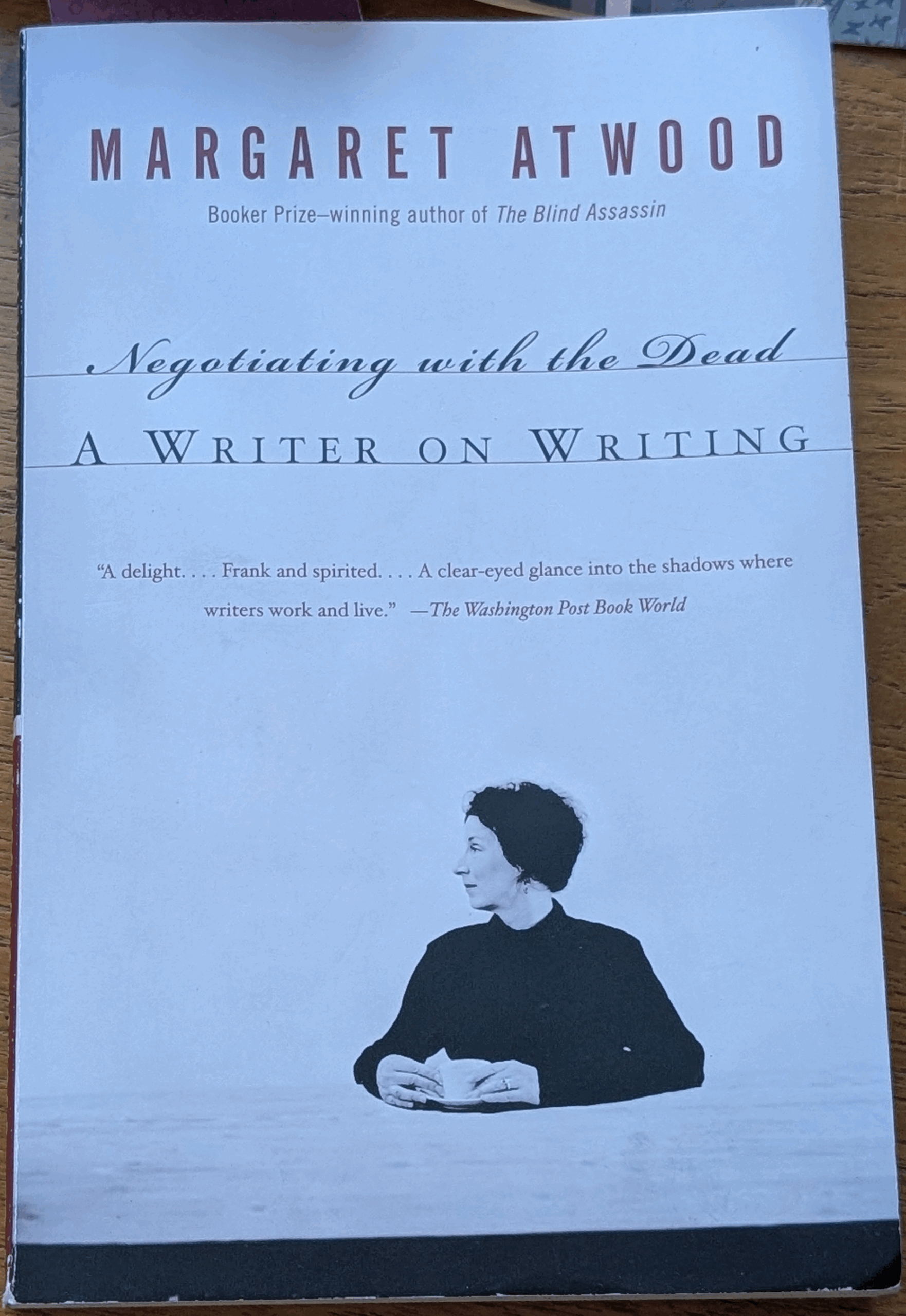
Atwood claims that “the mere act of writing splits the self in two” and that applies to playwrighting as well because people will confuse your characters with you. Many non-writers fail to realize that as soon as you put something down on the page it cannot be any human being living or dead. (Guides to playwrighting where this principle also obtains will have to be a whole different subject because… plays are a whole different thing.) Negotiating With The Dead eschews the ‘how to’ but rather offers us experiences of what being a writer has been like for Atwood. She emphasizes her initial discovery that “writing had a hardness, a permanence, that speech did not.” Therefore, the” act of writing comes weighted with a burden of anxieties. The written word is so much like evidence—like something that can be used against you later.” Ain’t that the truth?
Atwood enlightens us also as to the travails of being a so-called ‘woman writer’; her growing up in Canada in the 1950s taught some hard lessons first hand. Here’s a section on the difference: “A man playing the role of great artist was expected to Live Life—this chore was part of his consecration to his art—and living Life meant, among other things wine, women and song. But if a female writer tried the wine and the man, she was likely to be considered a slut and a drunk, so she stuck with the song; And better still if it was a swan song. Ordinary women were supposed to get married, but not women artists. A male artist could have marriage and children on the side as long as he didn’t let them get in the way… But for women, such things were supposed to be the way. And so this particular way must be renounced altogether by the female artist, in order to clear the way for that other way—the way of Art.”
In the final chapter of this book, Atwood reminds us that all writers learn from the dead:
“As long as you continue to write, you continue to explore the work of writers who have preceded you; You also feel judged and held to account by them.” Those words produced my ‘shock of recognition’, the realization of a beauty in which you feel a new commonality in another’s work. Not to imitate but ask, ‘Can I do that? Can my words shimmer and sing like theirs but in my own way?’ Writing is a test in which we ask ourselves all the time how wide the gap is between our aspiring and our actual writing.
In that same chapter, Atwood finally gets around to explaining her book’s title, Negotiating With The Dead: “Its hypothesis is that not just some, but all writing of the narrative kind, and perhaps all reading, is motivated, deep down, by a fear of and a fascination with mortality—by a desire to make the risky trip to the underworld, and to bring something or someone back from the dead.” In writing, we seek something. “The story in the dark. That is why inspiration is thought of as coming in flashes. Going into a narrative—into the narrative process—is a dark road. You can’t see your way ahead. … The well of inspiration is a hole that leads downwards.”
So, there is no hope of a book on how to get there, no manual or FAQ, even though that would wisely states that, “All writers must go from now to Once Upon a time; All must go from here to there; All must descend to where the stories are kept; all must take care not to be captured and held immobile by the past.” And that ain’t hooey.
BTW Somerset Maugham definitely said, “There are three rules for writing a novel. Unfortunately, no one knows what they are.”
Check out our other Substack: Chasing the Dead – Amateur Adventures in Genealogy. Chapter 15 defends our right to call the 2010 Elliott brothers genealogy trip an ‘odyssey’ even though we didn’t blind any cyclops or take any opium. Guiness, yes; opium, no.