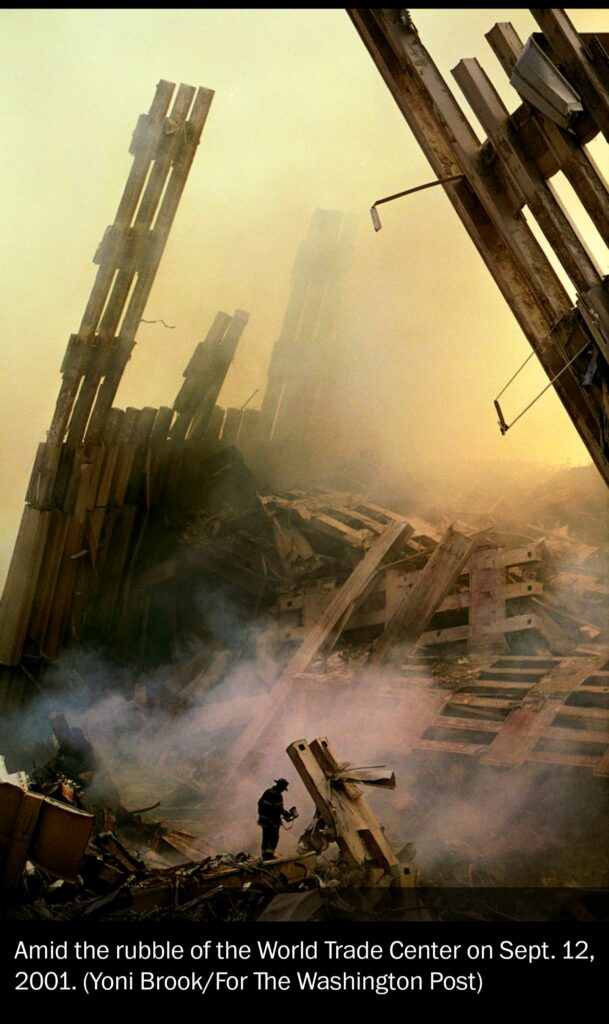
Why do we write about 9/11? I’ll brook no denials of thqt phenomenon; ubiquitous remembrances prevail this week. We do it because we care and remember the caring of that time. Why add to the mass of recollections and reminiscence? Because we were part of something terrible that seems wrong to forget while also wishful of recapturing the unexpected graces arising from those horrors. The quotidian nature of our lives, the rushing from here to there to do this or that blocks out the reality that we are always part of something, and then a massive misfortune makes our painful connectedness unavoidable or a triumph (‘Knicks in Five!”) produces a giddy synesthesia. Recognizing that we are part of a larger body might be painful or pleasurable, but it is always revealing that the caring about something is widely shared. 25 years ago, September 11th 2001, summer not yet done, the connectedness was inescapable for me and the many.
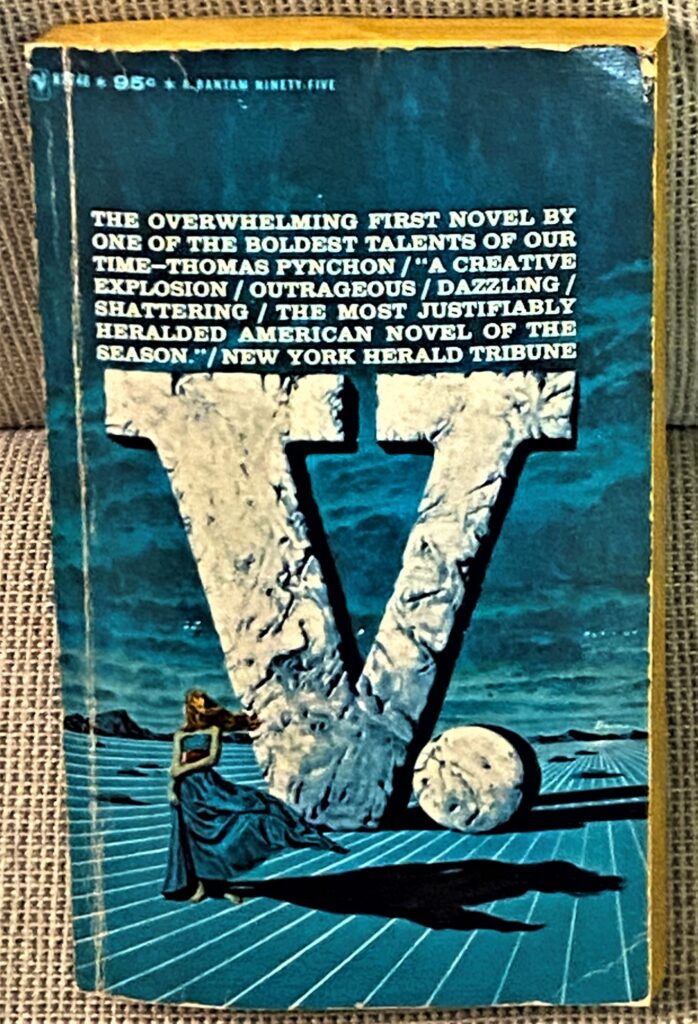
In my early twenties, Thomas Pynchon yanked me momentarily but unforgettably above my self-centered complacency Into at least an awareness of my connectedness with this passage from his novel V:
“Twenty days before the Dog Star moved into conjunction with the sun, the dog days began. The world started to run more and more afoul of the inanimate. Fifteen were killed in a train wreck near Oaxaca, Mexico, on 1 July. The next day fifteen people died when an apartment house collapsed in Madrid. July 4 a bus fell into a river near Karachi and thirty-one passengers drowned. Thirty-nine more were drowned two days later in a tropical storm in the central Philippines. 9 July the Aegean Islands were hit by an earthquake and tidal waves, which killed forty-three. 14 July a MATS plane crashed after takeoff from McGuire Air Force Base in New Jersey, killing forty-five. An earthquake at Anjar, India, 21 July, killed 117. From 22 to 24 July floods rampaged in central and southern Iran, killing three hundred. 28 July a bus ran off a ferryboat at Kuopio, Finland, and fifteen were killed. Four petroleum tanks blew up near Dumas, Texas, 29 July, killing nineteen. 1 August, seventeen died in a train wreck near Rio de Janeiro. Fifteen more died the 4th and 5th, in floods in southwest Pennsylvania. 2161 people died the same week in a typhoon which hit Chekiang, Honan and Hopeh Provinces. 7 August six dynamite trucks blew up in Cali, Colombia, killing about 1100. The same day there was a train wreck at Prerov, Czechoslovakia, killing nine. The next day 262 miners, trapped by fire, died in a coal mine under Marcinelle, in Belgium. Ice avalanches on Mont Blanc swept fifteen mountain climbers into the kingdom of death in the week 12 to 18 August. The same week a gas explosion in Monticello, Utah, killed fifteen and a typhoon through Japan and Okinawa killed thirty. Twenty-nine more coal miners died of gas poisoning in a mine in Upper Silesia on 27 August. Also on the 27th a Navy bomber crashed among houses in Sanford, Florida, and killed four. Next day a gas explosion in Montreal killed seven and flash floods in Turkey killed 138. These were the mass deaths. There were also the attendant maimed, malfunctioning, homeless, lorn. It happens every month in a succession of encounters between groups of living and a congruent world – which simply doesn’t care. Look in any yearly Almanac, under ‘Disasters’ – which is where the figures above come from. The business is transacted month after month after month.”
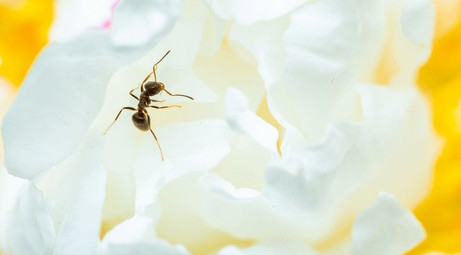
All those souls every day lost to disasters and we had nary a word about them. Even though I grew up in the 1950s and ’60s with the advantage of men in suits and ties soberly telling us about the workings of the world every night on our black and white TV and two daily newspapers delivered, similarly black and white, spreading before us additional dispatches on the events and antics of humans, this paragraph shook me out of the littleness of my comprehension. Most of us lived our lives and experienced our universe like the ink-black ants seen in the garden every year crawling on the white peonies, taking their journey on that flower and back to the anthill as encompassing their only and whole cosmos. Suddenly Pynchon conveyed to me that my usual condition was one of not knowing squared, of nearsightedness in my soul.
On Tuesday, September 11th 2001, I was back in that usual tunnel-visioned condition because I had things to do, a situation that tends to sharpen the focus on what is dangerously, urgently, or just burdensomely in front of our nose. Still an organizational consultant then (the term covered a multitude of gigs, pitches, skills, and sins) just a few months before ETS would hire me as their first (and as far as I know only legitimate) Chief Learning Officer, this was an off day from the engagements that had me traveling to Dallas and Denver, Pittsburgh and Princeton. But there were still things for me to do. My father, John T. Elliott, had developed late onset Parkinsons that didn’t become evident or get diagnosed until four years earlier when he was almost eighty. My mother’s death just after the turn into this century resulted in our family moving him from Florida to New York City, first at my saintly brother Brendan’s house with his wife Barbara and then through the extraordinary assistance of my equally saintly sister Irene to an assisted living facility run by the Catholic archdiocese, exquisitely situated on upper 5th Avenue across from the gorgeous Conservancy Gardens of Central Park.
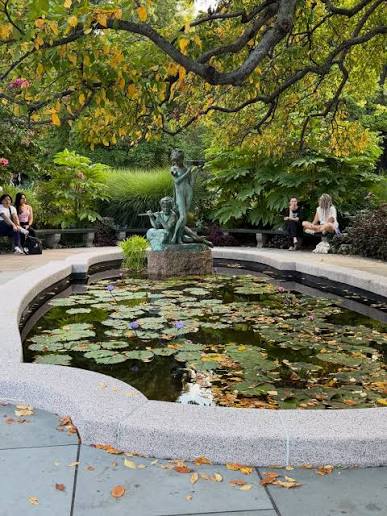
The Conservatory Gardens, a jewel in NYC 
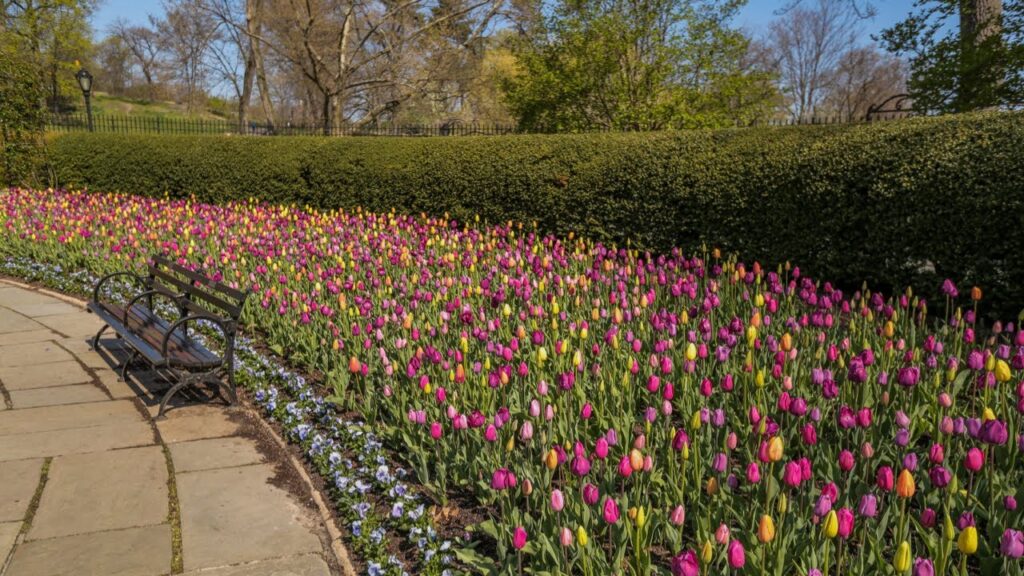
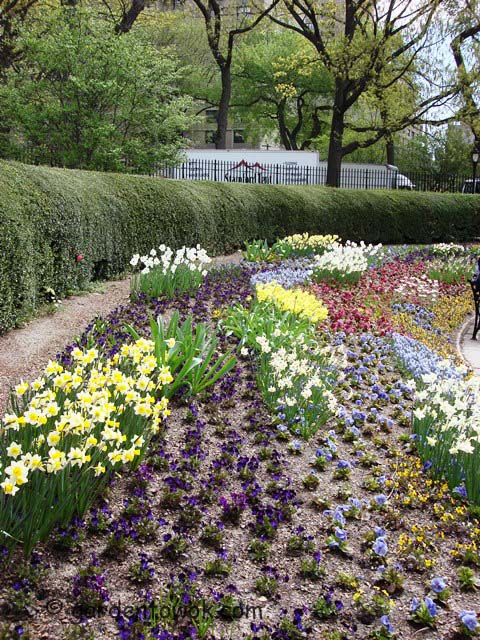
This is what featured outside my Dad’s window on 9-11-2001
The unsteadiness that is a feature of that disease and which in a way what cause six months in just time a fall, a broken hip, a tortured convalescence, and finally a lethal heart attack made us seek a companion for my father so that he could take walks in the park and around the neighborhood. At the time, my boss, Pam Cavanaugh, knew of a retired fireman, Pat , who had helped her with her own father in a similar situation. I had arranged with Pat to meet at my father’s room for a combination interview and introduction that morning of September 11th. Leaving our house in Tarrytown in what I thought was plenty of time to be there before Pat so that I could discuss the situation with my father who was still pretending to a more independent and steady existence then his body would support, like so many others, the first news of the events downtown came over the radio. Those accounts had the expected noise of confusion and contradiction the unmistakable signal that something significant had happened.
The traffic jam encountered southbound on the Major Deegan past rush hour reinforced this notion. So, using skills and knowledge gained by being a school bus driver again in my early 20s, I exited that roadway and wound through local streets that were already eerily deserted to get to the Cardinal Cooke residence. I wondered if Pat who lived in Yonkers would make it to the appointment, but when I reached my father’s apartment he was already there and the two of them chatting let me know that there was no need for introduction or interview.
So we watched the television. Peter Jennings in a suit and a tie was our guide. My father had been a navigator during World WarII on the route known as ‘The Hump‘ an extraordinarily dangerous flight pattern from Karachi —yes, the same Karachi that Pynchon cited in his litany of woes where ‘a bus fell into a river … and thirty-one passengers drowned — and northern China. When he returned to the Bronx and my mother and brother John (who, of course, barely knew him having been born pretty much nine months after their wedding night and eight months after my father was posted to Asia), he worked as a short order cook and took advantage of the GI bill to attend Brooklyn Polytechnic for a BS degree in Electrical Engineering. He graduated second in his class and held all sorts of other honors while during those four years also added — along with my mother — three more brothers to the family. He was an impressive man still even with Parkinson’s wasting him. I miss my father, but cherish that day was spent in part with him
On this day, as we watched the the steady shot of the World Trade Towers, a place where my consulting jobs had taken me many times, a locale where when we lived in Tribeca our eldest daughter learned to walk in the vast spaces of its underground mall, suddenly smoke obscured the view and my father said, “The tower has collapsed.” I thought he was mistaken, that we were seeing an illusion. But he proceeded to explain to me the realities of super heated jet fuel and skyscraper architecture. Pat, the retired fireman, concurred. That September 11th was a brilliantly sunny day made my acceptance of this reality all the more difficult. But then an hour later as we looked out the window onto 5th Ave., we saw a man walking dazedly covered in dust and ash, an ambulatory portent of the destruction done.
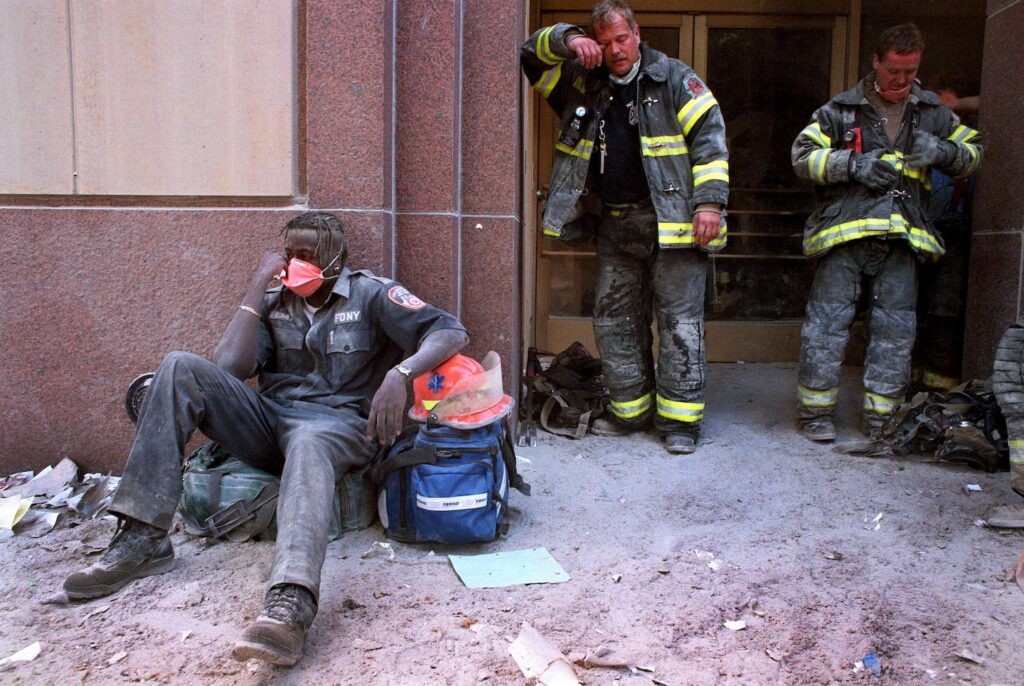
Among my large family, I alone was in New York City that day with a car. That status turned my time with my Dad into fielding panicked phone calls from family: a sister stranded, a child to be retrieved from school, a dog needing rescue from a locked house, and simply the reassurance that a niece was safe even though she had been in the towers that morning. My father’s facility decided to lock down and Pat and I left. (He served My Dad nobly and caringly right to the end.) My path then involved collecting people while avoiding the crowds covering broad avenues like Park and Madison as folks tried to walk anywhere as long as it was away from lower Manhattan. I burrowed into my best Bronx accent to talk a harried cop into letting me get on to the West Side Highway at 125th Street despite the orders to close it, and then drove as the only car for miles and miles back to Westchester County. In all that solitude, there was the beginning of the synesthesia; this horror is happening to me, to us, even if I am not among the dead. A city and then a country rediscovered that like the mycorrhizal network of an ancient forest our roots connect all of us even if the threads are thin and often unacknowledged.
At the end of that passage above from V, Pynchon writes of catastrophes that they happen “every month in a succession of encounters between groups of living and a congruent world – which simply doesn’t care.” Indisputable, But we care. We worry and mourn and comfort the victims even if they were strangers to us. And in the days afterward, the body of carers seemed to cover and stretch over the entire Republic and even beyond our shores. Since they knew we were from New York City, the staff at Hotel Aviatic in Paris where we had stayed that August sent a postcard hoping that our family was safe. When a shop owner in North Tarrytown gave me an American flag, our ensuing handshake brought tears to the eyes of both of us. The acts of kindness were not random, but purposefully caring.
. I miss that caring that everyone had for one another at that time. I wish disaster was not prerequisite for sympathy. I pray for the souls of those who were lost but even more earnestly for the families who lost them. 25 years later, the learning seems lost as well. But perhaps today by remembering we can recollect and restore more of that sense of similarity, of sympathy. The world largely gave us love and for a time we returned that gift.
AI will tell you if you ask that “No major unrelated natural or accidental disasters of catastrophic scale occurred in the United States on September 11, 2001, as the coordinated September 11 Attacks completely dominated national and global events.” Try to get Gemini to be less USA oriented and the answer doesn’t change much: “No major catastrophic international disasters or historical anomalies outside of routine, unrelated local incidents (emphasis in the reply) are widely recorded as occurring concurrently on September 11, 2001.” Is disaster ever routine as in ordinary, usual? Pynchon’s “encounters between groups of living and a congruent world” that would be filed later “under ‘Disasters’ “ seem not to have been recorded at all for that day, which is unfortunate because the absence of such evidence deprives us from remembering that our fellow beings suffered too, diminishes chances to realize connections, to care. Everything I perceive about the world right now tells me the caring is what most people crave, not just the words but the deeds that show palpable concern for their lives. Politics and technology seem to row in the other direction with concerns not for people, but for profit and power. 9/11 and it’s aftermath proved that our nation indeed the world doesn’t have to be that way. Of course, as Thomas Pynchon—whoever he is — noted, The world will always run afoul of the inanimate, but we the animate, the spirited, the living can soften and even repair those collisions with caring for each other. And this day, September 11th, reminds me to try harder to do just that.