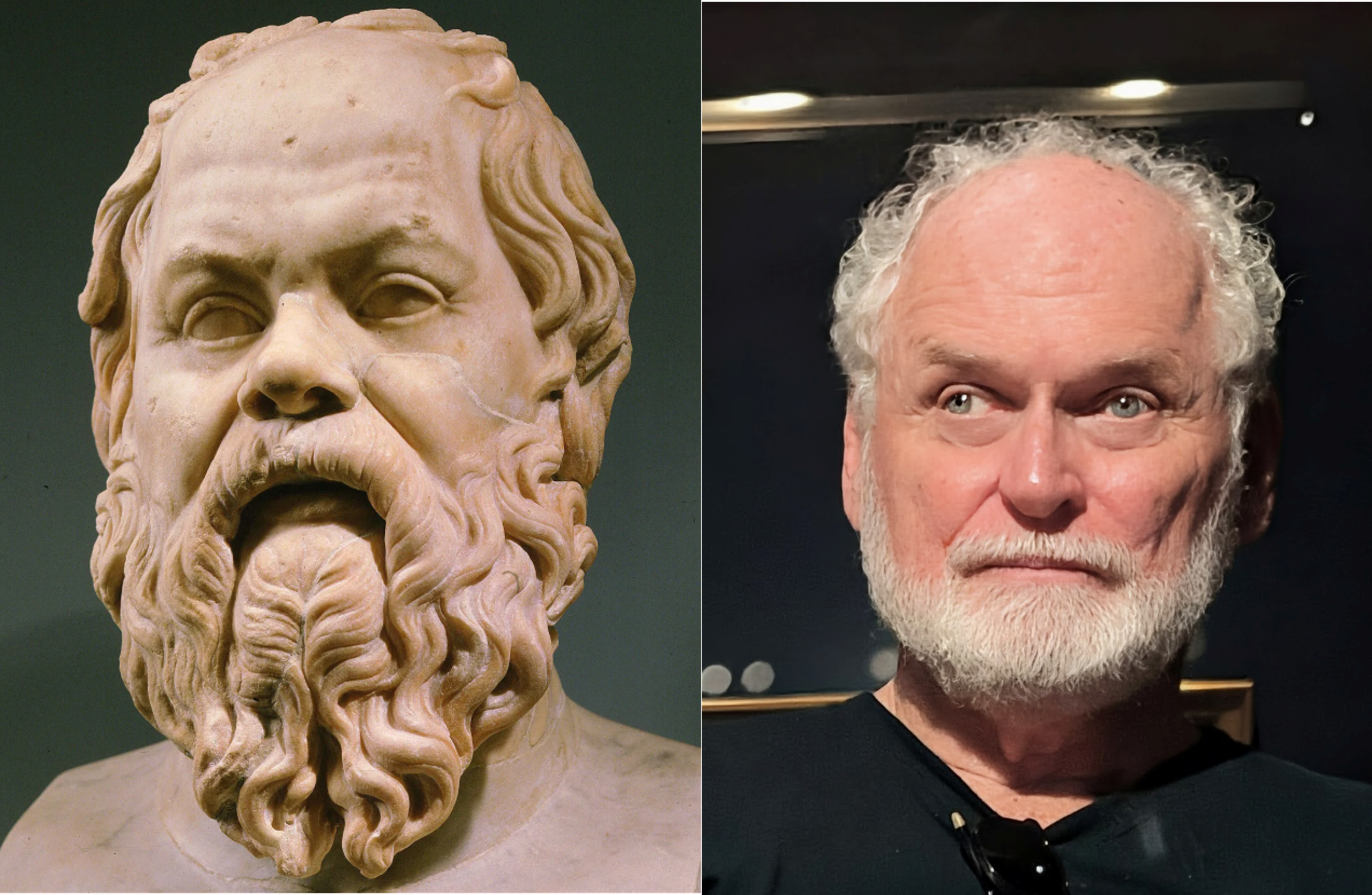
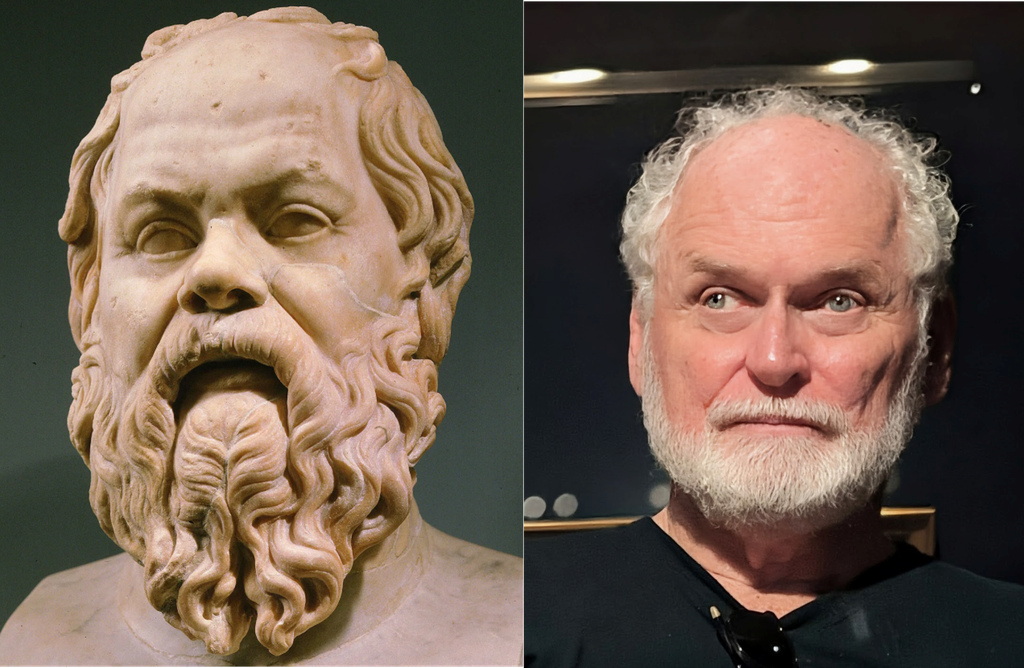
Philosophy fascinates me. Why? Growing up with a father who stocked his capacious basement library with books on ideas, knowing, and metaphysics favored such development, but my altar boy fascination with mysterious Catholicism had already initiated a curiosity in why things were and were not. Maybe that searching came out of as Hannah Arendt saw it in Life of the Mind, an interest in trying to reconcile words and appearances:
Nothing we see or hear or touch can be expressed in words that equal what is given to the senses. Hegel was right when he pointed out that ‘the This of sense . . . cannot be reached by language’. Was it not precisely the discovery of a discrepancy between words, the medium in which we think, and the world of appearances, the medium in which we live, that led to philosophy and metaphysics in the first place?
That variance between how things are described and experienced made me think there was something going on that we could not see, another dimension. the knowledge of which would be exciting to know. Nerd, right? That Oxford English Dictionary now classifies as rare its second meaning of the word philosophy as “The love, study, or pursuit of wisdom, truth, or knowledge” tells of the aversion of many fellow citizens to this kind of inquiry, an aversion I encountered mostly nonchalantly. Wearing coke-bottle glasses for my ‘lazy eye’ from the age of four already sorted me into the margins of grammar school and high school social groups anyway, a designation that like many before me was countered by cultivating the personae of class clown and would-be smartest-ass guy in the room.
Regardless of how strange this wondering might strike others, I continued on the pursuit of ‘Philosophie‘ as Yonge’s translation of Aristiles (purported) letter to Alexander the Great, Secreta Secretorum, defined it: “”no more but loue of witte and cvnnynge, and abstynence of foly, and Victorie of foole wille.” Okay, the ‘abstinence of folly’ didn’t happen; there was folly aplenty in those teenage years, but that love of wit and cunning was only topped by obsessions with basketball and trying to get a date. Pickup games of basketball were a lot easier to find than that date.
But when as sophomore at Manhattan College in the Bronx (yes, that odd naming belongs in the onomastics section of philosophy), I entered my required Theology course and met Father Reynold Borzaga I was hooked.
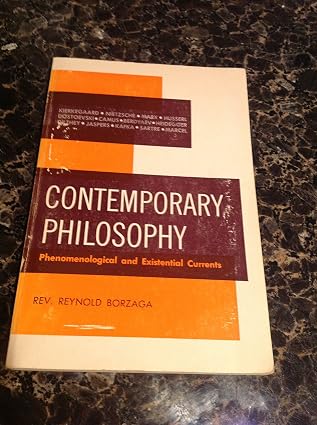
Borzaga was a cheerful, engaging professor with a wisdom that was deep and wide. His motivation with students (and I studied with him electively for three years) was to combat what he sensed was the loss of “the sense of finality and purposefulness in life, man has become the victim of confusion in every aspect of his existence. In this ‘hopeless’ situation brought about by the technological revolution and scientific progress, the meaningfulness of human existence was deteriorating.” His smiling answer was to maintain that “our theologizing today does not begin a systematically defined and organized body of truths, God-give straight from heaven. Today the theologian begins from within him/herself, the da-sein (being here) of the existentialist.” That was heady stuff and I won’t pretend that all of it landed, but the notion that in exploring that mystery of life the start was within me, that accepting the da-sein of an existentialist obliged me to try to uncover truth.
This mentorship might have had me pursue theology and philosophy full-time right after graduation, but having finally landed a date and being a good Catholic boy I got married and went off to teach at a reform school for three years. Philosophy was still a strong intent, but even an existentialist has to pay rent while making a mess of that first marriage. A reminder of my efforts to keep exploring philosophy still occupies a corner of my own library: Scribner’s Dictionary of the History of Ideas, a five volume set obtained through some 99 cent book club in 1973. And this book with Isaiah Berlin among its editors yielded quotes that I copied over in notebooks where inchoate plays, poems, short stories, and novels that never became choate.
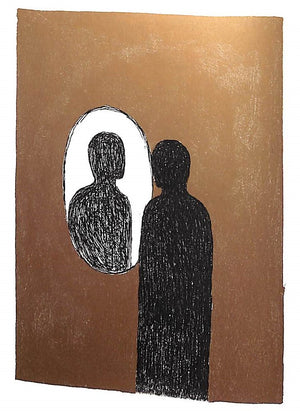
Joyce’s Ulysses
But showing another influence of my father, I kept collecting quotes even though teaching English to juvenile delinquents failed to provide many opportunities to use them. Then luck, the love of my original mother-in-law, and some daring decision-makers made me the alcoholism counselor of Saratoga County New York starting in August 1976, fifty years ago now. The luck was two books on alcoholism at the Kingsbridge Branch of the New York Public Library that I devoured before taking the civil service test to which my then mother-in-law alerted me. The two decision-makers, psychologist Bob Greenbaum and Skidmore College chaplain, Reverend Tom Davis decided that the smart-ass 24 year old who promised them that he would be a pile of clay they could shape into whatever they desired was a better bet than the other two candidates they were required to interview. (A few years later in the afterburn of that first marriage, I found myself on a date with a lovely woman who told me she had turned the job down. That did not stop me from continuing to date her, which seemed a mark of maturity at the time.)
In 1976, the art of alcoholism counseling — and it was an art — borrowed from everyone from Carl Rogers to Carl Jung with more than a few quotes purloined from Bill Wilson, co-founder of AA. The primary goal in my job was to aid client’s acceptance of their situation and as an English major one of the tools that came to mind was a block letter quote that was one of the last things F. Scott Fitzgerald (also a notable alcoholic) wrote in his notebook for the unfinished novel, The Last Tycoon: ACTION IS CHARACTER. The quote worked in two ways, usually a compendium of the person’s actions — and their effects upon themselves and others — belied their protestations that booze wasn’t a problem. If alcohol is causing problems, maybe alcohol IS the problem?
Then the same quote helped me to focus clients on what they needed to do to get and stay sober. And ACTION IS CHARACTER besides being a mantra for writers since F. Scott wrote it and shortly after died is a philosophy quote too. If existentialism arises from “the analysis of human existence and on individual human beings as agents freely determining by their choices what they will become”, action is character fits that set of ideas.
The quotes kept coming ‘You have chosen to be what you are’ by Sartre proved useful in pointing out that no matter what caused the alcoholism the agency to change the situation now rested with the individual. Yes, Sartre in the foothills of the Adirondacks in 1976. The unexpected posses power.
Then the collection of philosophical quotes and the broader realms of thought they represented became important tools for communicating the necessity for the alcoholics and their families to realize that in treatment they were on a mission to uncover truth about themselves and the world.
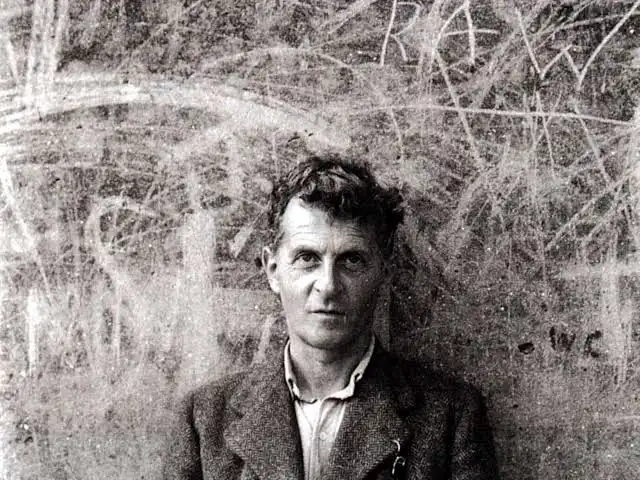
As my career — the straight jobs, the one that made money at first to write and act and then to raise children — veered into organizational development, my work was even more closely connected to the ‘life of the mind’, not that we dared call it that to our corporate masters who preferred to hear that we were going to solve a particular problem, which we did . Mostly. My colleague and inspiration Martin Leahy and I relied on philosophers and related thinkers like Gervase Bushe, Jurgen Habermas, Bob Kegan, Lisa Lahey, Fred Emery, Gregory Bateson, Martin Buber, John Searle, J.L. Austin, and Fernando Flores as material for our consulting designs without actually saying we were doing so to those taking a chance by hiring us. Their favorite philosophical quote might have been Ludwig Wittgenstein’s “Don’t try and shit higher than your arse.”
That work coincided with my conversion of all those handwritten snippets of quotes and scribblings in the back of paperbacks to the digital commonplace book that has grown to 588 pages and 180,000 plus words. Here is the first installment of some of my favorites associated with philosophy although such designations are more than a little arbitrary on my part. The first section is entitled…
Elusive Truth
“It is open to every man to choose the direction of his striving; and also every man may draw comfort from [Gottthold] Lessing’s fine saying, that the search for truth is more precious than its possession.”
Albert Einstein
“Citius emergit Veritas ex errore quam ex confusion”
Truth emerges more readily from error than confusion
Francis Bacon
Truth is mysterious, elusive, always to be conquered. Liberty is dangerous, as hard to live with as it is elating. We must march toward these two goals, painfully but resolutely, certain in advance of our failings on so long a road.
Albert Camus
Towards the end of his novel La Chute, Camus’ narrator ponders this question:
Don’t lies eventually lead to the truth? […] Sometimes it is easier to see clearly into the liar than into the man who tells the truth. Truth, like light, blinds. Falsehood on the contrary, is a beautiful twilight that enhances every object.
“If you shut up truth and bury it under the ground, it will but grow, and gather to itself such explosive power that the day it bursts through it will blow up everything in its way.”
— Emile Zola
“Because a thing is eloquently expressed it should not be taken to be as necessarily true; nor because it is uttered with stammering lips should it be supposed false.”
— St. Augustine
“Perhaps the mission of those who love mankind is to make people laugh at the truth, to make truth laugh, because the only truth lies in learning to free ourselves from insane passion for the truth.”
Umberto Eco, The Name of the Rose
“We live in a fantasy world, a world of illusion. The great task in life is to find reality.”
— Iris Murdoch
In a time of universal deceit, telling the truth is a revolutionary act.”
George Orwell
“…hypocrisy thrives upon the silence and the goodheartedness of respectable people, and that deceit, when it passes unchallenged, can be bestowed upon one generation by another. ”
John le Carre (David Cornwell) In a letter to his aunts
Taste
“To prefer one bit of media over another — to have taste — is a characteristic developed with maturity; it is babies who are hypnotized by bright colors and sharp movements.”
Helen Holmes
“Des goûts et des couleurs, on ne discute pas.“
French proverb
De gustibus non est disputandum, or de gustibus non disputandum est, is a Latin maxim meaning “In matters of taste, there can be no disputes” (literally “about tastes, it should not be disputed/discussed”). referring to tastes and colors. … The saying is an ancient Roman adage. Wikipedia
“De ideabus non est disputandum”, as Mitya jokes to Alyosha while facing his murder trial,
Fyodor Dostoevsky | The Brothers Karamazov
More truth
“Upon my word, I think the truth is the hardest missile one can be pelted with.”
— George Eliot, Middlemarch
“I didn’t really say everything I said”
Yogi Berra
“You see ’tis with weak heads as with weak stomachs, they immediately throw out what they received last; and what they read floats upon the surface of their mind, like oil upon water, without incorporating.”
Alexander Pope, letter to Henry Cromwell 1710
“I’ve been thinking with my guts since I was fourteen years old, and frankly speaking, between you and me, I have come to the conclusion that my guts have shit for brains.”
Nick Hornby, High Fidelity
Each side has assumed a monopoly of the sunlight and has plunged its antagonist into the night, each side demands that you decide between day and night. -Martin Buber, Carnegie Hall, 1952
The Elliott Family Motto: Don’t kid yourself.
John T. Elliott
“The first thing is not to fool yourself, and you are the easiest person to fool.”
Richard Feynman
But we often stumble over our own mistakes and faults because of ignorance, since we fail to secure sight or light for them.”
τοῖς δ’ ἑαυτῶν ἁμαρτήμασι καὶ κακοῖς πολλάκις περιπταίομεν ὑπ’ ἀγνοίας, ὄψιν ἐπ’ αὐτὰ καὶ φῶς οὐ ποριζόμενοι.
Plutarch
When men are most sure and arrogant they are commonly most mistaken, giving views to passion without that proper deliberation which alone can secure them from the grossest absurdities
David Hume
“You must become an ignorant man again
And see the sun again with an ignorant eye
And see it clearly in the idea of it.”
—Wallace Stevens, “Notes Toward a Supreme Fiction,” 1942
“There’s nothing quite as frightening as someone who knows they are right.”
Michael Faraday, scientist of electromagnetics
“An ounce of practice is worth a ton of theory.’
Motto of the Dublin Woolen Company
Mr. Wilson, like M. Poincaré, belongs to the small group of honestly strong men who think before they act, for thinking is the hardest work in the world, and the most repugnant to our nature. Therefore the lazier sort of politician takes refuge in activity. The Superman, the Man of Action, acts before he thinks: he has to do his thinking afterwards.
G.K. Chesterton
“The search for truth is a struggle: part of a war against chaos, a strenuous ritual to wrest reality from doubt by naming its parts, or a spell to save it from being engulfed in nothingness.”
— Felipe Fernandez–Armesto[i]
Consider the modus ponens. If a hypothesis h entails evidence e then not e entails not h. As Duhem and Quine, in slightly different ways, pointed out it is not h alone that entails e, but rather h and b, that entails e, where b is background knowledge. Thus, not e entails not h or not b, and one doesn’t know where to put the not. [sic][4] Allen Franklin
(Note: what is a modus ponens? “The rule of logic which states that if a conditional statement if p then q is accepted, and the antecedent p holds, then the consequent q may be inferred; an argument using this rule”
There comes a time in history when the man who dares to say that two and two make four is punished with death.
Albert Canus, La Peste and George Orwell, 1984
Carl Sagan said “One of the saddest lessons of history is this: If we’ve been bamboozled long enough, we tend to reject any evidence of the bamboozle. We’re no longer interested in finding out the truth. The bamboozle has captured us … Once you give a charlatan power over you, you almost never get it back.”
Dr. Martin Luther King Jr.: “To think incisively and to think for one’s self is very difficult. We are prone to let our mental life become invaded by legions of half truths, prejudices, and propaganda.”
I think that there is a moral to this story, namely that it is more important to have beauty in one’s equations than to have them fit experiment. If Schrödinger had been more confident of his work, he could have published it some months earlier, and he could have published a more accurate equation. It seems that if one is working from the point of view of getting beauty in one’s equations, and if one has really a sound insight, one is on a sure line of progress. If there is not complete agreement between the results of one’s work and experiment, one should not allow oneself to be too discouraged, because the discrepancy may well be due to minor features that are not properly taken into account and that will get cleared up with further development of the theory.
Paul A. M. Dirac — Scientific American, May 1963
Suppose an individual believes something with his whole heart; suppose further that he has a commitment to this belief, that he has taken irrevocable actions because of it; finally, suppose that he is presented with evidence, unequivocal and undeniable evidence, that his belief is wrong; what will happen? The individual will frequently emerge, not only unshaken, but even more convinced of the truth of his beliefs than ever before. Indeed, he may even show a new fervor about convincing and converting other people to his view.
Leon Festinger , When Prophecy Fails (1956)
(For Festinger and his colleagues, this was an opportunity to test the theory of cognitive dissonance. According to the theory, human beings do not deal with conflicting beliefs and perceptions by testing them against facts . They reduce the conflict by reinterpreting facts that challenge the beliefs to which they are most attached. As TS Eliot wrote in Burnt Norton, humankind cannot bear very much reality.)
John Gray, The Silence Of Animals
“To be right is the most terrific personal state that nobody is interested in.”
Frank O’Hara
“Every explanation is after all an hypothesis.”
— Ludwig Wittgenstein, Philosophical Occasions, 1912-1951
“Everyone has got some preconceptions, but you have to readjust them in front of reality. Reality has the last word.”
–Henri Cartier-Bresson
[i] Fernandez–Armesto, F. (2000) Truth: A Guide for the Perplexed. New York: St. Martin’s Press.