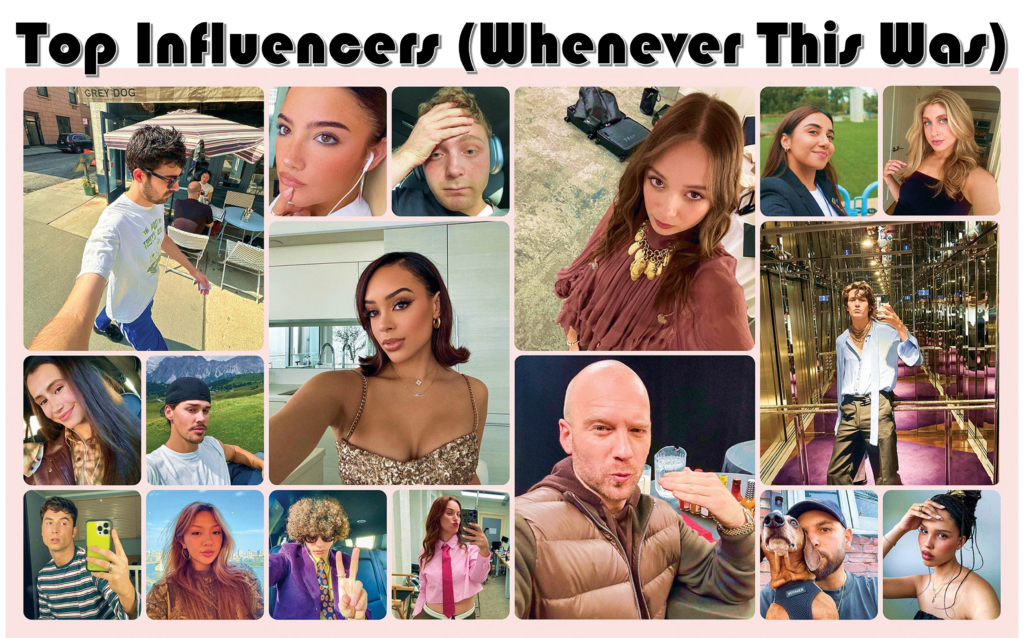
Walking on the street recently where I live in Princeton New Jersey, John P., a former high school teacher of my son approached me with the greeting of “Hello, influencer!” At 74 years old,’ influencer’ is an appellation neither expected nor desired; although it is preferable to ‘Hello, boomer!‘ This funny, kind, and really good teacher alluded in that choice of words to the undeniable fact that ever since 2018 my posts are frequently up on social media and occasionally going viral as was the case with a piece from our YouTube channel making it onto the Jimmy Kimmel show and garnering 170,000 views. (Our standalone report on the dangers of Portland got 3500 views; not too shabby for a little theater company like ours.) John was acknowledging that the work currently done with Knowledge Workings Theater involves self-promotion, fervent (frenetic? frenzied? too frequent?) endeavoring to influence the public to attend our performances. He said ‘influencer‘ with a smile; like I said, John is a nice guy.
However, I don’t want to be an influencer. My current occupation is playwright and that work along with other writing should occupy my time when I’m not hanging out with my girlfriend/wife of 46 years or having fun with my kids, grandkids, other family, and friends. The dilemma for writers ― especially playwrights ― is that creating the text, as slippery and arduous a path to traverse as that process demands, does not suffice. The work is metaphorically at base camp on the climb to the peak of Mount Everest. Congratulations on not killing yourself on the Khumbu Glacier but you have a loooonnnggg way to go

Two figures in my theatrical pantheon explain this reality very well. Harold Clurman, in his book On Directing put it straightforwardly: “The play does not exist in the theater as a written text until it has been absorbed in the process of production. Drama is ‘translated’ or transformed into the person of the actor – ‘the body of the art of the theater’, as Stark Young put it.” The late great Tom Stoppard managed to be even pithier on this point: “We attempt to be coherent tellers of tales…. Plays are events rather than texts. They’re written to happen, not to be read” Plays have to go up somewhere in order to become plays.
“Plays are events rather than texts. They’re written to happen, not to be read”
Tom Stoppard
The critic Hilton Als details that process of shaping appropriately as an intricate chain of collaboration: “feelings and thoughts … are put forth, first, in a primary text, which the actor interprets—an interpretation that the director supports or edits, in an attempt to help build, in a made-up world, [into] an atmosphere of verisimilitude”. There is another dimension of the process of production, however, beyond what’s listed above: finding a space, assembling resources, and, most importantly, attracting an audience. Clurman, Stoppard, and Als all assume that the translation, happening, building they describe will take place in front of people. In 2026, that’s a hefty assumption.
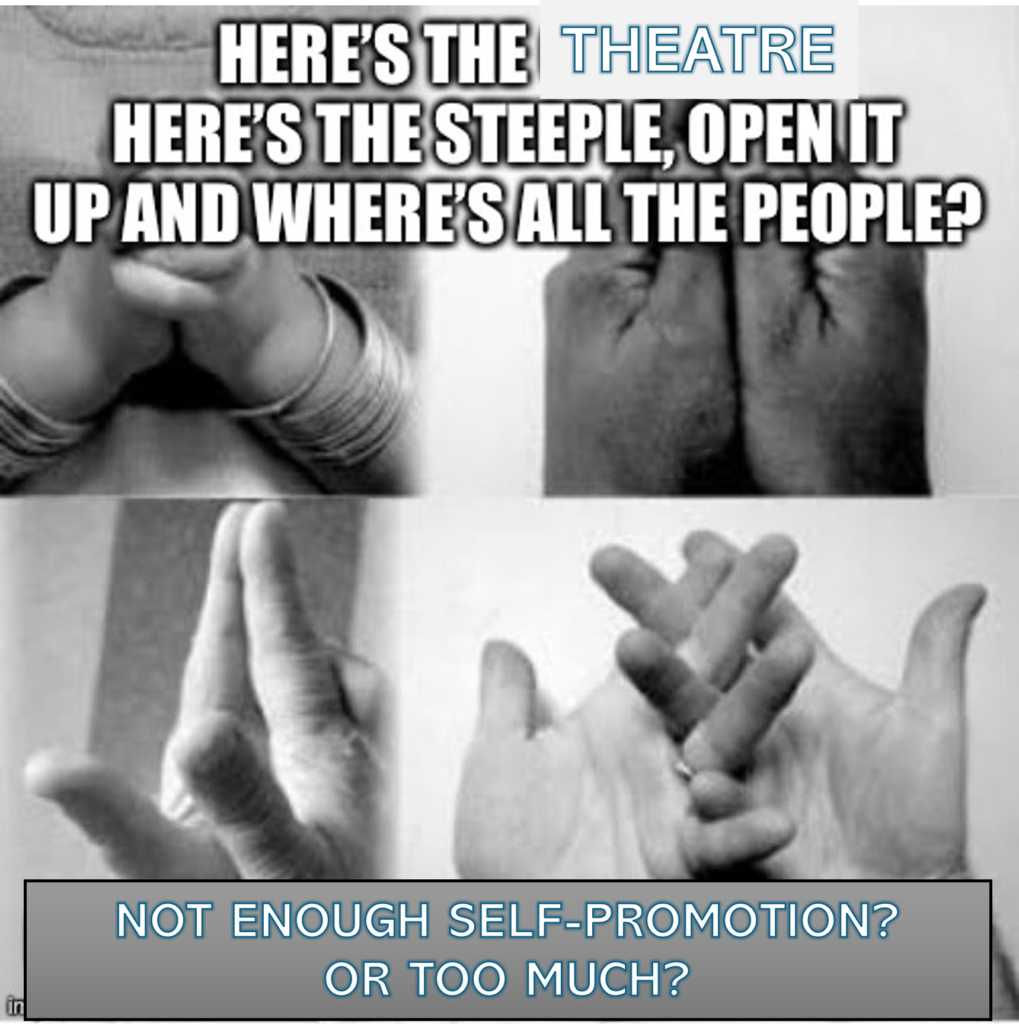
Even if a playwright strikes the good fortune of a theater company wanting to produce their play, that artist still must assume some of the responsibilities of getting people into the seats. Being accepted by an established company or festival with mailing lists, members, marketing staff, and other advantages — a definite GOOD occasion — may not seem to require self-promotion, but any playwright having had that luck will tell you that getting their work produced involves getting themselves promoted from A to Z, from the submission of the original script to the podcast interview before opening night.
“The whole act of writing is intensely private, and it can’t be accompanied by self-promotion. I think interviews contaminate the necessary privacy a writer needs. That sounds almost priggish, but for me it’s the truth.”
Brian Friel
If, as is increasingly common, due to factors such as the closure of many theaters during COVID and changes in the entertainment appetites of the public, the playwright must turn to self-producing, as Gifford Elliott and I explored in 13 Ways of Looking at Self-Producing. In that mode, writers — like it or not, admitting or denying, tight-lipped or screaming — are also turning to self-promotion. (Like this cool interview in London Pub Theatre magazine)
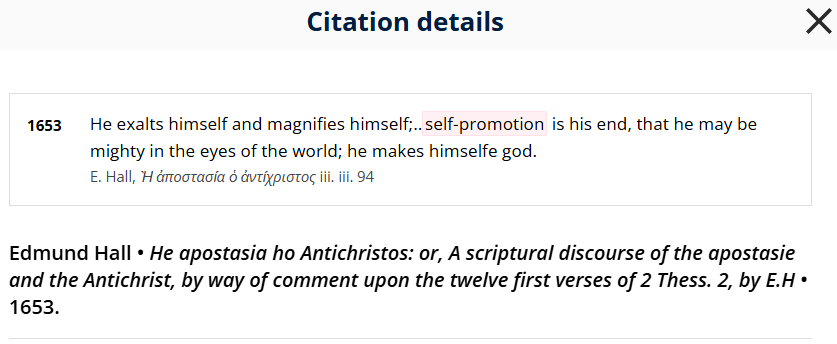
And, there it is, the hyphenate freighted with connotations of attributes ranging from pride to vanity, boastfulness to ostentatiousness, even to that much overused and misused epithet, narcissism. Of course, not everyone views that noun as harshly as Edmund Hall, our 17th century friend at the top of this post, who according to the Oxford English Dictionary was the first person to trot out the term. That he did so in his writing about what the Antichrist will look and act like when that sucker shows up is unfortunate for all subsequent self-promoters.
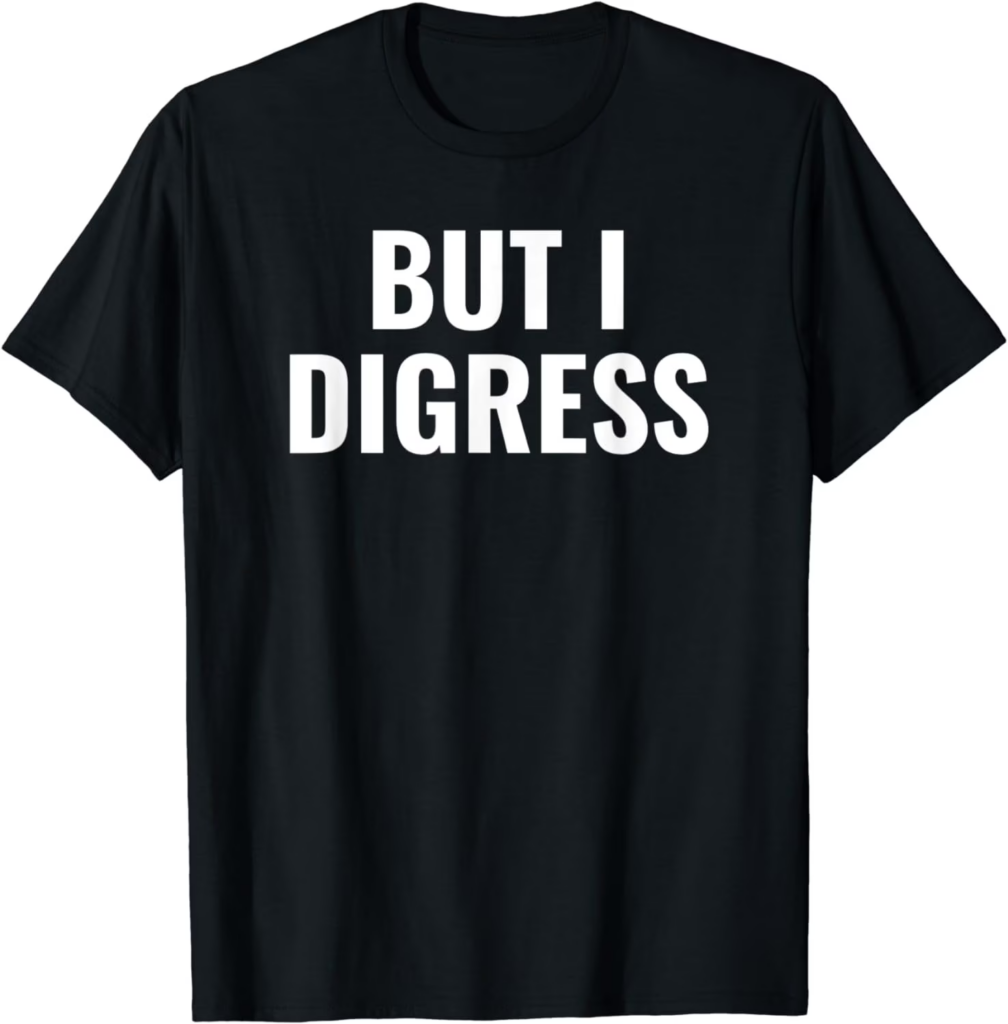
(It is a coincidence that there’s been a lot of talk about the Antichrist lately but nobody seems to have connected it to self-promotion like Edmund Hall in 1653. Just saying. And Edmund Hall was a Puritan theologian, so he probably didn’t like theater anyway whether the playwrights were self-promoting or not. But I digress and, BTW, according to Merriam Webster, this same Edmund Hall was the first person to use in writing the phrase ‘but I digress.’ Don’t say this post wasn’t a learning experience.)
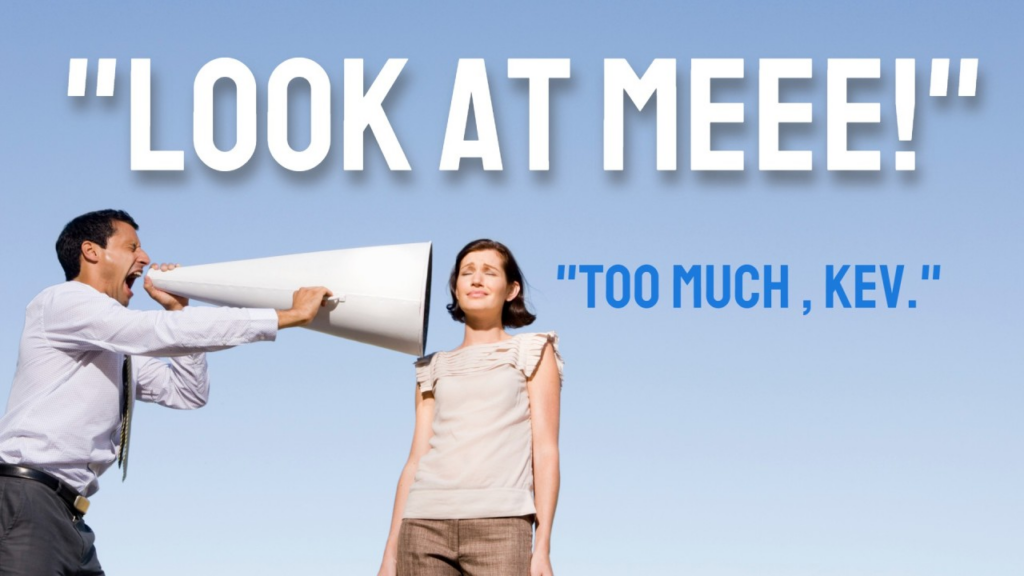
What bothers me the most about having to self-promote the work that our actors, director, designers, etcetera put together for that Stoppardian ‘event”, a real play, is not the effort. Grabbing the attention of people involves creativity; it may take time away from other activities like writing, but the challenge keeps the mind sharp. The strongest discomfort arises from the fact that the people closest to you receive the greatest amount of promotion. We are constantly flogging our projects to them even though the flogging in this case does not involve a cat of nine tails, but rather as the dictionary notes the kind that is “(t)o sell or offer for sale, originally illicitly.” But even without the lash, our brand of flogging can be painful for both parties, the flogger and those ‘flogees’ even if that’s what we have to do.
And yet, to paraphrase the old U.S. Navy saying, the self-promotion will continue until ticket sales improve. As Scott Perry once noted (improbably in a screed against those against polyamory), we “live in a world choked with ideas, where anything that rises to your consideration has necessarily won a Darwinian battle among hyper-specialized memetic replicators competing for your attention.” Yes, it’s a war out there and the emails, reels, flyers, endless Instagram posts, and Substack notes are the flares we send up to try to draw allies — you, and you, and you over there hiding in the corner — to the front line be it a basement, an attic, or a 99 seat theater with signs warning about rodents. We need you as allies wherever it is we where we have taken a stand to mount our theatrical event. This means that rather than apologizing for this endless set of intrusions playwrights (and other artists) should state their apologia, their defense of these actions as a matter of self-belief rather than self-promotion. Bolster the conviction that whatever this play has to say is worth advancing.
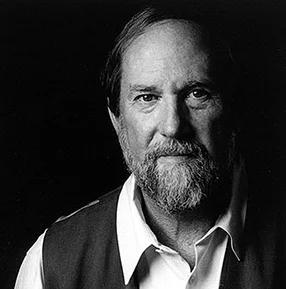
Such a belief is akin to what the late poet Stephen Dunn described As his own revelation:
“I think one of my early motivations for writing was that other people’s versions of experience didn’t gel with my own. It was a gesture toward sanity to try to get the world right for myself. I’ve since learned that if you get it right for yourself, it often has resonance for others.”
Our putting the play out there and, therefore, necessarily putting ourselves out there is part of a ‘gesture toward sanity’, a rebuke to doubts and distrust about ourself. Agnes de Mille once described a meeting that she had with Martha Graham during a bout of inconfidence in her own “scale of values”:
Martha said to me, very quietly: “There is a vitality, a life force, an energy, a quickening that is translated through you into action, and because there is only one of you in all of time, this expression is unique. And if you block it, it will never exist through any other medium and it will be lost. The world will not have it. It is not your business to determine how good it is nor how valuable nor how it compares with other expressions. It is your business to keep it yours clearly and directly, to keep the channel open. … You have to keep yourself open and aware to the urges that motivate you. Keep the channel open … No artist is pleased. [There is] no satisfaction whatever at any time. There is only a queer divine dissatisfaction, a blessed unrest that keeps us marching and makes us more alive than the others
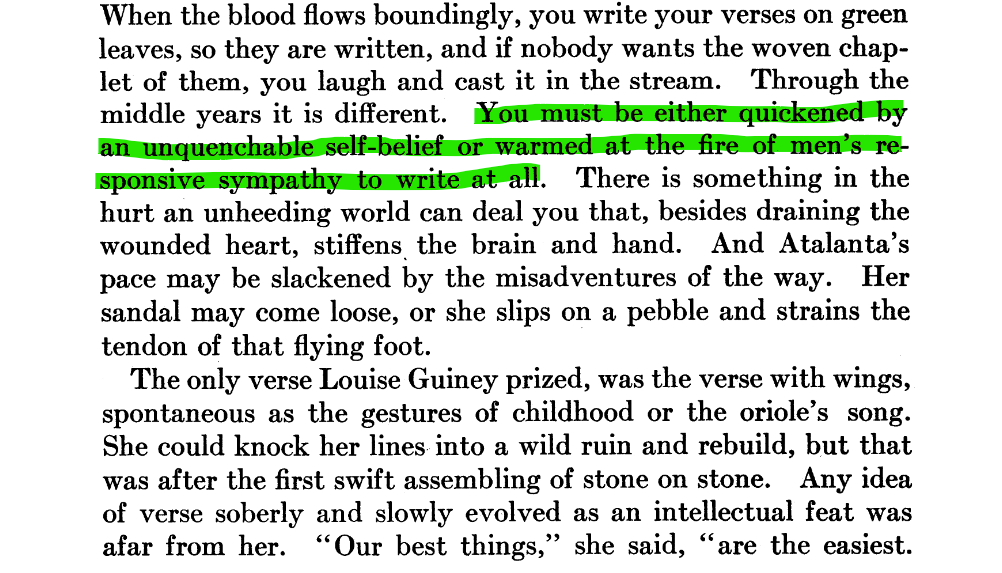
In a similar tone, one hundred five years ago, the critic Alice Brown wrote in the North American Review of the now mostly forgotten American poet, Louise Imogen Guiney that a writer “must be either quickened by an unquenchable self-belief or warmed at the fire of men’s responsive sympathy to write at all.” Kudos and congratulations to those lucky enough to be warmed at the fire, but for the rest of us we need to make sure that nothing and no one — including ourselves — quenches that self-belief that what we have should exist and since it is theater there must be an audience period
So, for those who thought this essay would provide a surrender to the discomfort of both the transmitter (me) and the recipients of our promotions for plays including our current offering, RETROSPECTIVE, take a deep breath and blow that disappointment away. Then go ahead and click for some tix available at this link for one of the eight shows of RETROSPECTIVE May 14-23 at Barons Court Theatre in London. Or send this to someone that you know in the London area, for God’s sake. And, yes, this self-promoting but no, I am NOT the anti-Christ. How would I find the time?
And for any of my colleagues suffering similar temporary doubts about championing their own work, my advice is stop worrying about what others think of your courage and conscientiousness and creativity as you self-produce. You’re sacrificing so much to give this work to the world with no guarantee of any return. The carpers and complainers might more accurately deem your efforts selfless. And if they still sneer, then I offer the advice my late brother Mike Elliott often intoned, “F**k them if they can’t take a joke!”
Very informative! I use Nano Banana 2 Image Generator (https://nanobanana2.love/) for my creative projects — amazing results.
https://nanobanana2.love/