

Everything Donald Trump is doing in the United States reminds us that we cannot rely as much as we did in the past on self-restraint embedded in what Alexis de Tocqueville called moeurs—convention, custom and good manners. Yet if some of the threats are new, the ideas and institutions are familiar, and the task of standing up for them in dark times is one that liberals have often faced before.
Timothy Garton Ash
Ambition is a seed of authority. No one gains and then keeps authority without some ambition to do so. Whether occurring early or late, seeking influence that will be theirs to wield, a ‘strong desire to achieve something’ is an ambition for authority. There are manifold levels of authority across different spheres.
- Individual: the security guard requiring ID for the millionth time to the Chairman of the Joint Chiefs of Staff ordering missile strikes
- Institutional: the prom committee picking the theme for this year’s formal to the Catholic Church issuing encyclicals shutting down any chance of women being ordained.
(Notice that possessing the authority doesn’t mean the decisions taken are correct; the prom committee definitely regretted their choice of Carrie as last year’s theme.)

It’s a great country.
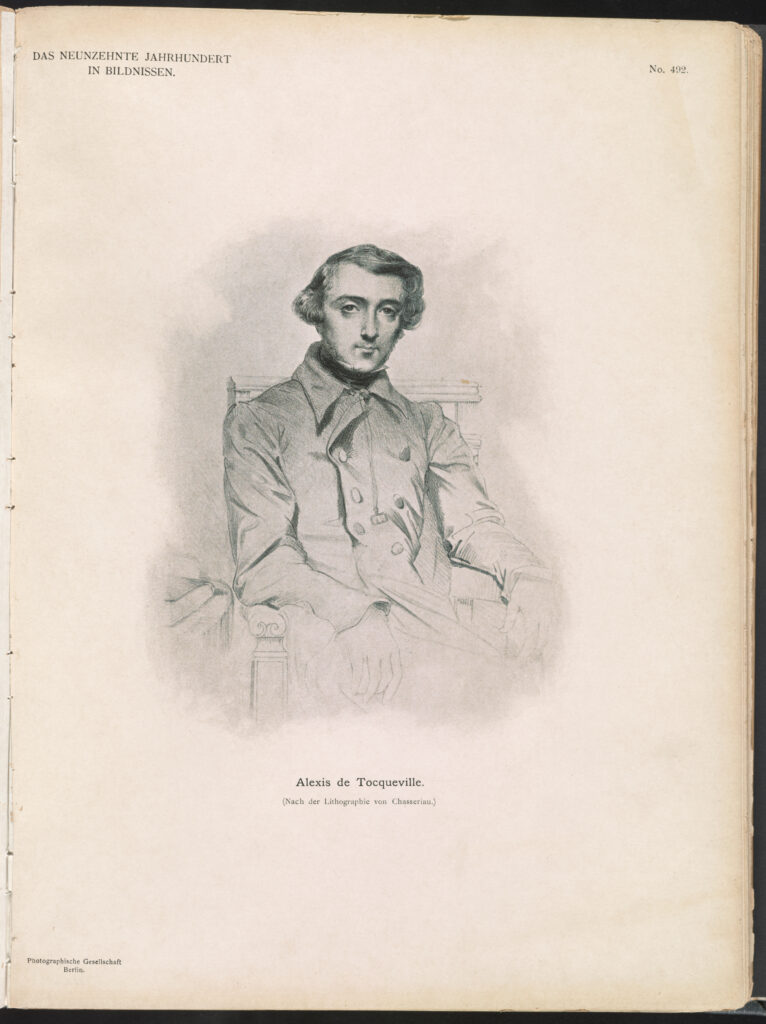
While scope of authority obviously varies greatly, the ambition has a commonality (as noted in our first entry in this trilogy) “to evoke voluntary compliance or assent, on grounds distinct from coercive power or rational conviction.” Compliance or assent from whom to what? That depends upon the type of authority. In Garton-Ash’s quote above, the assent desired was to those de Tocqueville moeurs, to what he perceived as USA culture. In 1835’s Democracy in America, he expanded generously upon the connotations of that French word, moeurs:
- “the whole moral and intellectual state of a people”
- “habits of the heart”
- “the various notions that men possess”
- “the diverse opinions that are current among them”
- “the whole range of ideas that shape habits of mind”
The authority of culture — “the customs, practices, or behaviour typical of a particular social group or sphere of activity” — shapes our behavior and thinking automatically, invisibly. Paradoxically, Garton Ash’s use of the word ‘self-restraint’ suggests that the authority is both around us and within us. ; Evidence of its presence might be manifested by comments like “that is/isn’t the way we do things around here” that can occur in our self-talk or in conversation with others. This particular variety of authority also popped up in literature like James Fenimore Cooper’s Last Of The Mohicans series, sermons from a variety of peculiarly American religious sects, and newspaper broadsides celebrating these ‘habits of the heart’.
Of course, there were dissenters and diverters from this authority; Slaveholders and abolitionists obviously disagreed on who Could be the property of another, but they shared commonalities included a strong attachment to the US’s brand of organized religion, the notion of America as God’s chosen land, and with notable exceptions for the first group and often the second, the golden rule. But what the French aristocrat — his full name was Comte Alexis-Henri-Charles-Maurice Clérel de Tocqueville — noticed was how powerful a particular belief about how things should be was already engrained within us as a nation. This is not something that could be said of the United States of America today. We are as the phrase has it ‘all over the place’. As previously discussed, one of the ways that fragmentation shows up is in our problems with authority.
For those who still require examples of our problems with authority consider these examples:
- A wacky California sheriff seizing ballot materials in defiance of state officials
- A USA Supreme Court that will likely reduce voting options despite the overwhelming majority of Americans wanting them and no evidence of serious problems associated with what was’ the way we do things around here for a long time through many elections
- A basely obsequious Republican congress seeking to take that movement of disenfranchisement even further
- A scurry of Democrats always asking for money and never answering what they did with it—$1.5 billion spent and you couldn’t get Kamala Harris elected?!?— while generally failing to even slow the degradation of our Republic because their ambitions don’t point in that direction
- A senseless war of which few approve in which again the least advantaged humans bear the brunt of deprivation and destruction
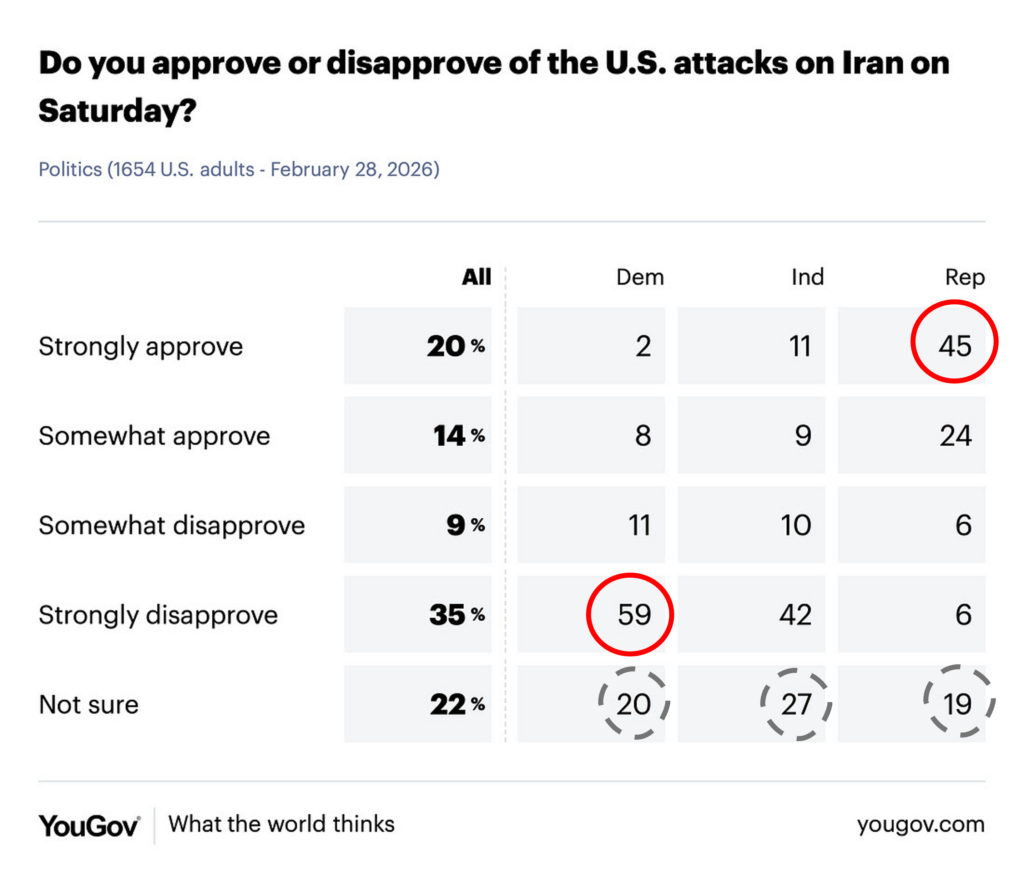
We cannot agree on who has the “Power or right to give orders, make decisions, and enforce obedience.” Our disputes on “moral, legal, or political supremacy” are profound. Those phrases and quotes are the very definition of authority. Our current situation provides ample evidence every day of our problems with authority. How would they diminish when the distrust of institutions that are supposed to be ‘of, by, and for the people‘ is accompanied by refusals of almost all comers to find ways in which citizens might rectify the perceived defects? For example, the previous US Congress passed fewer than 210 bills in its two years, compared to an average of over 389 in the preceding 32 years.
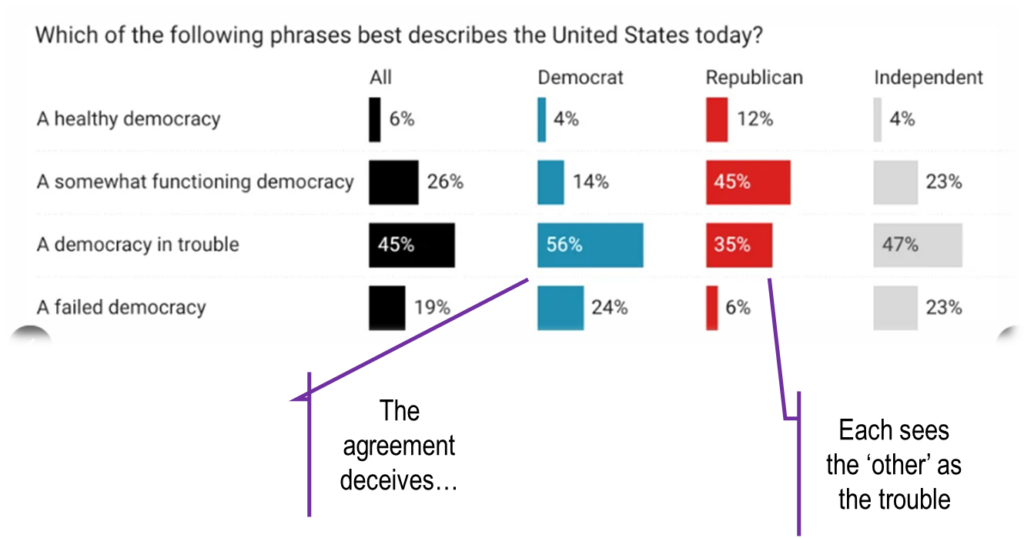
Consider again de Tocqueville and Garton Ash, the ‘moeurs—convention, custom and good manners’, the self-restraint, the commonality. Gone. The last time we had a failure to resolve our problems with authority a civil war resulted. Today a large segment of Americans slides from one side to the other every four years breeding governments that never solve the polarization and its deleterious effects upon our democracy.
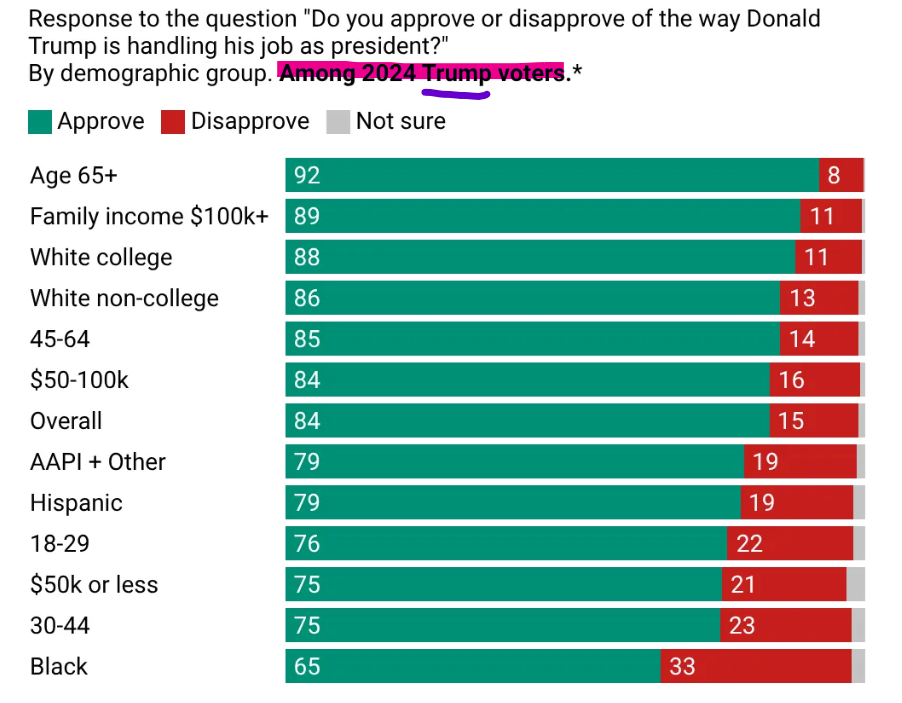
Let me pass the baton to Kyla Scanlon to further elucidate our problems with authority:
Example A: “Confusion and nihilism are products, not symptoms, of this regressive world. The people selling “agency” benefit from a world where nobody trusts institutions, because distrust is the market condition that makes their product necessary.”
Example B: “The general lack of rules combined with the inability to take back control despite it being promised is the extraction part of a belief market. The gap between what participation promises (free yourself) and what it delivers (enormous losses and even less freedom than before).” [Emphasis added]
Example C: “Uber ushered in the era of rule-breaking that everyone else seems to be following. Just do what you want and pay the fine later. Rule-following becomes a signal of weakness or naivety rather than integrity.”
Ruing that condition, our collective problems with authority, my ambition became writing about this disastrous dissolution. Where did MY authority to do so come from, my”power derived from or conferred by another; the right to act in a specified way, delegated from one person or organization to another; official permission?” SubStack and the InterWeb: anyone can write about anything
But doubts did emerge on this journey into our national rejection and dismantling of institutional authority. The first part published here and here of investigating whatever happened to the centripetal authority that held the Republic together was the easier task. What had disappeared in our country is a common sense of right and wrong, a centripetal authority. Who could deny that assertion? The antonym of ‘commonalities’ is ‘differences’ and we are swathed with differences.
Photo credit: Smilie027
Proposing ideas for how we deal with our collective problems with authority stymied me. The first step to any solution would be that we admit that this loss of a common sense of right and wrong, of fair play, of honoring precedent, and respecting our fellows are all signs of our UNITED problems with authority but the only commonality amongst all of our riven groups is the belief that their enemies are the problem. That makes for a seemingly barricaded path to any possible change
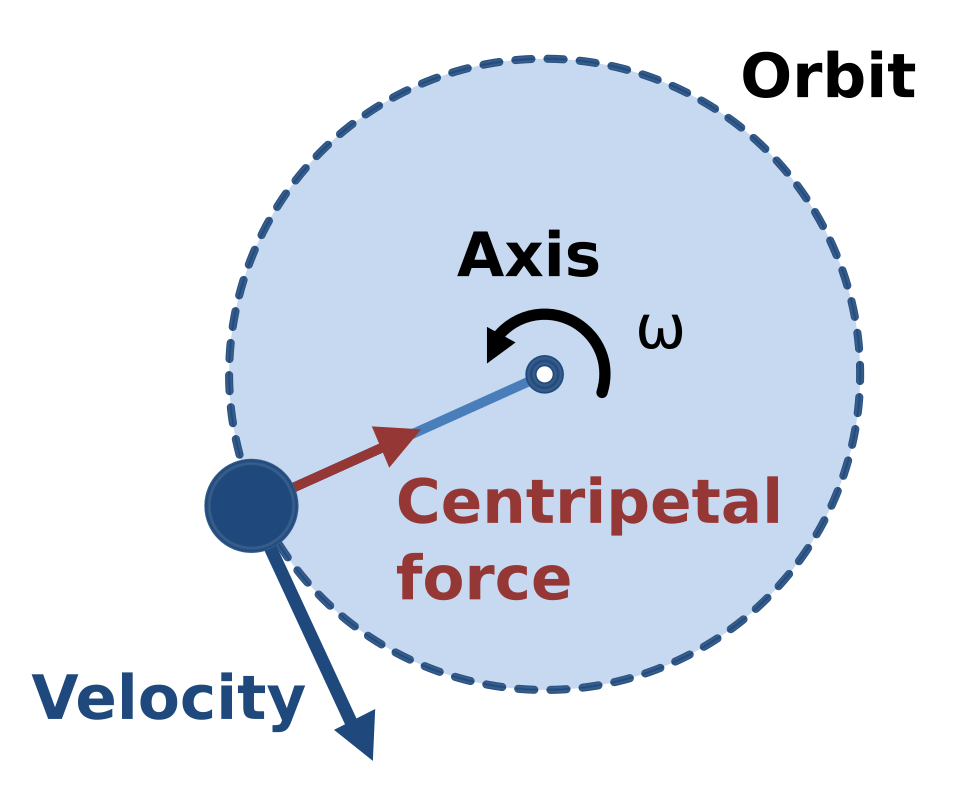
Consider that above metaphor of a centripetal force of beliefs of the mind and habits of the heart about what was right and wrong that kept us enough together as a nation.
“Centripetal force (from Latin centrum ‘center’ and petere ‘to seek’[1]) is the force that makes a body follow a curved path. . Isaac Newton coined the term,[2] describing it as “a force by which bodies are drawn or impelled, or in any way tend, towards a point as to a centre” The citizens are the bodies; the Republic is the center. What happens when the force either goes out of existence completely or separates into smaller weakened entities? (Yeats’ declaration that “the centre cannot hold” proves again that sometimes poets are prophets.) If the force dissipates, the body goes flying. For our purposes, due to our problems with authority, the force shrinks and splinters and the American experiment is close to hurtling through the void like a drunk from the Tilt-A-Whirl who disdained the seatbelt.

Photo credit: Derrick Mealiffe
Initially documenting that disintegration of authority in the first two parts of the trilogy gave me hope that all the finale required was to follow Richard Sennett and “imagine new forms of authority in society, to create after we have negated.” But Sennett writing in 1980 mainly prophesied the problem not the solution. Even then, he correctly sussed how the brakes of authority were going. He cannily foretold conditions currently in play on both sides:
Contemplate this description and compare to today’s behaviors : “There is a bravado way of losing one’s fear of authority. It is flat denial, simple insult.” Using the speech of nihilist Bazarov from Turgenev’s Fathers and Sons, which he considers “not only evil but bad psychology” as an example, Sennett paints a scene and method evident today: “The fear of the authorities Bazarov preaches involves pushing them outside making them totally external figures who excite nothing of one’s own feelings—save disgust.”
January 6, anyone? But also eruptions on the left have sometimes met this description.
Who would have guessed that the America that de Tocqueville and others praised would start to resemble the world that a rude sarcastic nihilist character in a Russian novel desired? But isn’t this rejection of all authority but our own a kind of nihilism that the philosopher and scientist Michael Polanyi also predicted?
Looking to what others have suggested as solutions didn’t satisfy me. A facile remedy proposed to this diagnosis by some is a return to religious authority. We all know how that’s worked out previously and I say that as an Irish Catholic with great respect for the role of spirituality in our lives and the recognition that religions telling people what to do has frequently proved dangerously flawed.
Those proponents of a solution of the government just reinforcing the Madisonian notion of the people as the authority fail to recognize the kinks in it as Sennett notes
“To say that the people are the source of all authority tells very little psychologically about how authority is made how, out of the acts of discussion and mutual decision making, some people are asked to be the protectors of others or forbidden to become their lords. A law can state this will occur but what makes it humanly possible? The tolerance—indeed the necessity—of periodic disorder which the Enlightenment Democrats envisioned is no longer entertained in law or practice.”
Written in 1980, true today. The notion that the people are the source of all authority is now broken, and by our actions it seems that our ambition is not to be constituted but to punish the other, to keep them from exercising their authority.
Progressives also do not endorse popular foundations for authority; they disdain majorities that fail to accept a mandatory reshaping of society in the name of identity and anti-racism and socialism. Sennett would argue that relying on the central government to sway opinions and actions to serve the interest of all was a bad idea, a tendency that would lead the way to despotism, to abuses of authority that would bleed over into coercion. Oops! Did that happen?

Some reading my connecting a quote of Sennett to our current leadership partisan, but check if the feeling reading these words written over forty years ago is eerie to you: “One of the most repressive beliefs a tyrant can arouse is that everything he does is clear and distinct. Look, what I do is straightforward, it all fits together, nothing is hidden. In other words, how can you resist me?” Sennett attached Hitler and Mussolini to this description: “The Fuhrer and the Duce were embodiments of what it is to be a strong person rather than a competent director of the legal order of government. A person can be simple, clear, and strong all at once, as a big bureaucracy cannot be. By appealing to the virtues of simplicity, authoritarian leaders attempt to wreck or abandon the ordinary machinery of government so that they can rule through force of personality alone.” What particularly disturbs about this description coming out of the past is that the adherents of the current government likely might agree with this characterization. Maybe they read these parts of Sennett too and made them a blueprint for their administration.
Appropriately for someone who would prove to be so prophetic himself, Sennett ends his book Authority by referencing Dostoyevsky. Strange? Not if you realize that the Russian novelist foresaw how the revolutionaries would behave when and if they came to power. He understood the conundrum of authority and freedom. Sennett uses Dostoyevsky’s tale of The Grand Inquisitor contained within the novel the Brothers Karamazov to depict our quandary. Very briefly: this story within the story is how Christ comes back to Seville, Spain during the time of the 16th Century inquisition, performs a few miracles, and gets arrested by the Grand Inquisitor who then berates him for offering mankind an impossible combination:
“The grand inquisitor accuses Christ of having offered the people a vision of authority and freedom combined. It was inhuman of Christ to do so, because the people cannot bear the burden of this combination.”
Ironically, we’ve ended up in a situation perpendicular to what Dostoyevsky portrayed. If as Sennett has it, “Something incontestable and certain, something which brings people together: this is the bond of authority”, in the America of 2026 everything is contestable by one group or another that ensuing division and feebleness constitutes our problems with authority.
What could alter our Tilt-a-Whirl country flying into the void? Sennett resorts to something Dostoyevsky remarks elsewhere: “The only answer to a mystery is another mystery.” We must imagine a response outside the terms currently offered. Such is the response of the Christ in Dostoyevsky’s parable, but you’ll have to read that on your own. Sennett argues that, “Whether or not the logic of repression is finally rejected depends upon how dissonant and how pertinent the response can be, like a painter being a whole new landscape by changing the position of his easel.” Sennett offers a paradox: freedom and authority must coexist, but how?
We will have to draw up some a kind of…
Hail Mary Plays for Our Society
Looking around the various spheres of communication from SubStack/ Medium/Patreon/Threads/RSS/Etc to Journals to Institutional Publications, there are other people who see these problems with authority and have imagined and devised approaches that are worth considering. Here are a few of them:
Ambition is a seed of authority:
Examine our ambition in this matter
Is our ambition here to solve with others more problems with authority? To restore some commonalities — like fairness, committee, honesty, kindness — that will serve as a useful foundation for civic life? Or is our ambition to have things the way we think they should be, to see our party triumph and our foes trampled? If it’s the latter, our problems with authority will continue. The numbers of people on both sides guarantee turmoil unless we turn to each other. There is no fantasy of unanimity but there must be a concentration on concord. Ambition is a seed of authority. A vengeful divisive ambition will yield a faulty ill-fated authority.
Release our illusions about the other guys
The U.S. was the only country in a worldwide survey to say most fellow citizens are bad people That’s a place we can start to forge a new source of authority: bonds with our fellow Americans. Most of our fellow citizens who disagree with us politically are NOT bad people. Stop engaging with the polarizers and seek out common ground where feasible.
This is what Braver Angels have been trying to do and the authority we need now has to come from new groups of people who will look to what they can agree upon instead of what separates them. Erica Etelson provides solid insights on ‘What can grow from common ground?’ Erica also presents strategies to combat authoritarianism in which she cites Susan Stokes on Depolarization who “warns that autocrats feed off polarization, and she encourages depolarization efforts that can help restore the electorate’s faith in the democratic norms and institutions autocrats routinely disparage. (Stanford’s Strengthening Democracy initiative is an excellent source for creative, evidence-based depolarization strategies). That said, Stokes notes that polarization and institutional distrust tend to be higher in countries with high levels of economic inequality so, perhaps, the depolarization remedy cannot take effect without first addressing the economic drivers.”
This will be difficult but necessary. The toughest issues in this approach are around abortion and gender identity. I do not pretend to have answers to those fights.
Think Venn diagram not Spectrum of Beliefs
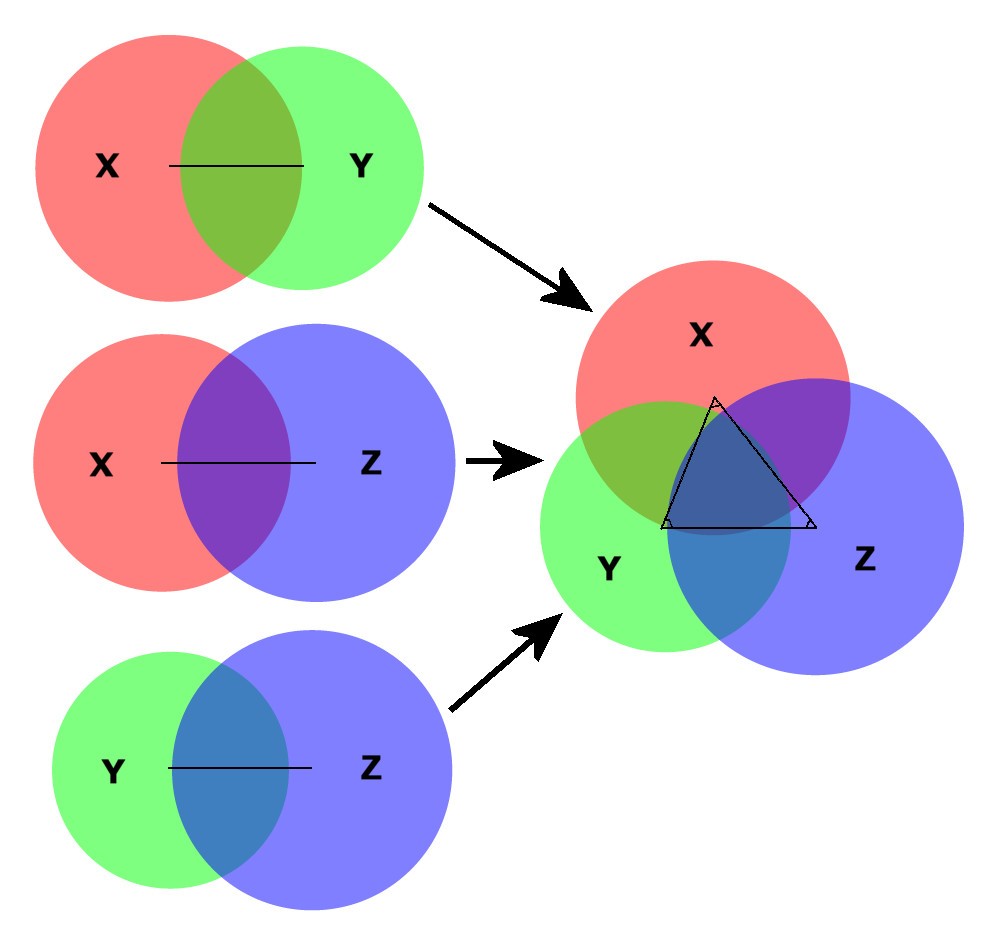
As Etelson indicates above, we are not as citizens all at some mark on a line according to our beliefs and political affiliation. Surveys show a significant number of Americans are NON-ideological. Stop thinking right and left and instead build on new ideas. This group, similarity hub, echoes Etelson and allows us to think of convocations where ordinary citizens would dictate areas of agreement on a common basic culture, those widely accepted ‘mouers’ of Tocqueville about how we treat each other, how we trust in institutions, how we play fair. (HT to James Coan who offered additional resources to consider: common ground survey aggregator Americans Agree (americans-agree.org) and Voice of the People online public consultation surveys that show overlaps (vop.org/common-ground)
Treat morality as cooperation, and, therefore, find ways to cooperate with those in the middle
Cooperation is the action or practice of working together, or with another or others, towards the same end, purpose, or effect. We have to find some purposes that matter to all of us, to exhibit a willingness to be of assistance as a start to that conversation. Out of these efforts, a sense of how people should be with one alter will create a new source of authority, a sort of equivalent to de Tocqueville’s moeurs, which will also accommodate degrees of autonomy.
This paper specifically focuses on leveraging the theory of Morality as Cooperation “which provides an increasingly supported conceptualization of morality within a cooperative framework. In essence, MAC posits that humans are social beings who have developed a variety of solutions to recurrent cooperative problems. These solutions are manifest in the form of instincts, intuitions, and institutions, which drive cooperative behavior and serve as criteria for evaluating others’ actions. MAC refers to this collection of cooperative solutions as “morality” and – drawing on game theory – has identified (at least) seven distinct types of cooperation, which give rise to (at least) seven domains of morality.” I found this hopeful sign. Now we just have to do it.
Deal with the difference between authority and coercion
Pollster Elliott Morris is kind of a realist optimist. “Being seen as tough is an advantage in a politics where voters want parties to deliver for them no matter what, but it’s likely not worth being called cruel and elitist. In our poll, Democrats lead the Republicans on the U.S. House generic ballot by 10 percentage points among registered voters. At least in the short term, that’s a worthwhile trade.
But the Democrats’ weakness problem stands out as a particularly strong signal of intra-party dissatisfaction. When we look at how each party’s own identifiers rate their own party, the weakness gap for the Democrats really jumps out. Just 53% of Democrats call their party tough, compared to 80% of Republicans. And 31% of Democrats say their own party is weak — almost three times the 13% of Republicans who say the same about theirs. ” We must press elected officials in every possible way to reassert the authority of their institution without falling into the embrace of coercion.
Shake off our learned helplessness regarding authority
Andrew Sullivan reminded me of that description in talking about what he correctly forecast as the then impending war with Iran. He called it “a learned helplessness in the polity”, a collapse of self-efficacy, a tendency to no longer believe in any ability to change things in the political world. Sullivan thought that could change by external events, by the corporate powers, lobbyists, and government pieces that sought this war going too far: “My bet is that if the administration goes to war with no Congressional vote or public debate, that learned helplessness will curdle into something angrier.” We are seeing how that bet played out in the near-term in the No Kings Protests this Saturday, March 28th. BUT… we have to move beyond protests that gather like-minded people only. March to actions that will make a difference around those areas of commonality.
An intriguing example of moving beyond — and Indivisible is doing this as well is Democracy2076 . This organization only formed in 2025 also noticed our collective problems with authority. They documented “a 25-year decline in public trust in institutions and optimism about the next generation’s future.” And God bless their optimism they sense that “We have an opportunity—with substantial and coordinated cross-sector interventions—to shape the next political realignment to ensure pro-democracy tenets are at its core.”
Back to Richard Sennett
As noted above, to state the identification of some certain solution for our problems with authority is beyond my ken and confidence. I can’t. I could fake it or suggest something that would prove to be illusory, but spending all of this time examining the dissolution of the former repositories of central authority in American society made me cautious about such tomfoolery.
Instead, we have to get serious about the difficulties posed by the dispersion of forms of authority that served us not perfectly but serviceably: The Judiciary, Journalism, Universities (and the science and other learning explored there), Medicine, even Government. We are still recovering from the cynical, idiotic statement (actually a borrowing from others) of Ronald Reagan that “The nine most terrifying words in the English language are ‘I’m from the government and I’m here to help.’ ” Tell that to a hurricane victim. Tell that to someone who managed to use their GI Bill Funding to gain an education and change their life. Tell that to someone who got mortgage assistance from the Feds. Tell that anyone who benefits from government services on any level.
But those things can’t happen without some kind of authority that helps to organize these responses and programs. And that requires a greater commonality within our polity. The government needs to become again one of our sources of authority, but one that we can challenge in constructive ways.
The answer to our problems with authority begins with us. Righting of this ship requires finding the greatest number of people who can agree on the truth as a product of an ongoing rigorous dialogue and not something left untested. Close behind as a condition for rediscovering authority is return to a celebration of those who are good to their fellow citizens without any ulterior motive other than wanting to be good.
Don’t believe me? Doubt my authority to say so? Let’s take that up in the comments.